
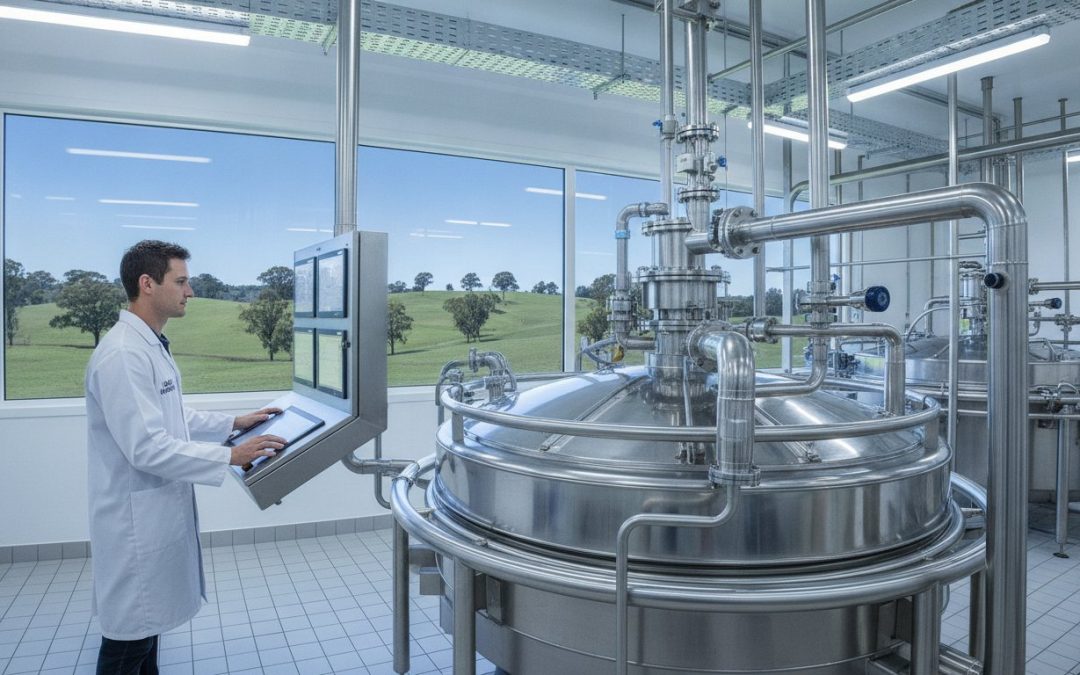
Australia’s milk production is estimated to increase to 8.6 million metric tons in 2026, marking a pivotal moment for processors managing a market projected to reach USD 11.02 billion by 2034. You likely recognise that capturing this growth requires a move away from legacy hardware toward sophisticated, engineered systems that can withstand high input cost pressures. Selecting the correct dairy separation equipment Australia is a critical step in ensuring your plant remains competitive, especially as effluent management standards and food safety regulations become increasingly stringent. Inefficient separation doesn’t just hurt your bottom line through product loss; it compromises the long-term reliability of your entire production line.
This comprehensive 2026 industrial buying guide provides the technical insights necessary to select, optimise, and maintain centrifugal separation technology for maximum yield and consistent quality. We’ll examine how bespoke disc separators and decanter systems can reduce operational waste and improve resource recovery while meeting the rigorous demands of the Dairy Industry Code. By the end of this article, you’ll have a clear roadmap for partnering with local experts to secure equipment that delivers both performance and environmental responsibility across its entire lifecycle.
Key Takeaways
- Contrast the mechanical functions of disc stack separators and decanter centrifuges to ensure you select the most effective technology for specific processing streams like cream standardisation or whey recovery.
- Learn how high-speed centrifugal partitioning enhances product quality and helps your facility comply with stringent Australian food safety and hygiene standards.
- Evaluate critical procurement criteria such as throughput capacity, separation efficiency, and the ease of integrating new systems into existing automated Clean-in-Place (CIP) workflows.
- Discover why partnering for customised dairy separation equipment Australia provides a strategic advantage through bespoke engineering and ongoing national maintenance support.
- Understand the importance of matching separation technology to specific feed characteristics to optimise yield and minimise environmental impact in modern dairy processing.
Understanding Industrial Dairy Separation in the Australian Market
Industrial dairy separation represents the technical backbone of modern milk processing. It involves the high-speed centrifugal partitioning of milk components to achieve precise fat content and clarify the product. As Australia’s milk production is estimated to increase by 1.4% to 8.6 million metric tons in 2026, the demand for high-throughput systems has never been higher. Market consolidation, such as the acquisition of Fonterra’s Australian assets by Lactalis, reflects a broader industry shift toward larger, more efficient facilities that require robust infrastructure. Precision is not merely a preference; it’s a requirement for meeting Australian Food Standards and ensuring consistent product quality across large volumes. Modernising Australian dairy plants with advanced dairy separation equipment Australia allows processors to handle these increasing national volumes while maintaining the strict hygiene levels expected by domestic and international markets.
The Role of Centrifugal Force in Dairy Processing
The physics of dairy separation relies on accelerating the natural settling process through mechanical force. By applying immense G-force, a centrifugal separator can partition fat globules from the denser skim milk in seconds, a process that would take hours under traditional gravity-based skimming. This speed is essential for maintaining product freshness and preventing microbial growth. High-performance systems often utilise airtight or hermetic designs. These configurations prevent product oxidation and foaming, which preserves the delicate structure of milk proteins and ensures a longer shelf life for the final product. This level of control is vital for processors moving into high-value sectors like colostrum processing and specialty protein recovery. The same centrifugal principles that drive dairy clarification are also transforming adjacent agricultural industries, as demonstrated by the growing adoption of wine clarification centrifuge technology across Australia to maximise juice recovery and reduce oxidation risks.
Meeting Australian Industry Standards for Hygiene
Compliance with Australian food safety regulations requires equipment that supports rigorous sanitation protocols. Industrial separators must feature designs compliant with international standards such as 3-A or EHEDG to guarantee they are free from crevices where bacteria can colonise. Material choice is equally critical; high-grade stainless steel provides the necessary corrosion resistance to withstand both the lactic acid in dairy and the harsh chemicals used during Clean-in-Place (CIP) cycles. Seamless integration into a plant’s centralised control system ensures that hygiene is maintained through automated, repeatable cleaning processes, reducing the risk of human error and product contamination.
Investing in robust dairy separation equipment Australia ensures that your facility can adapt to changing consumer demands for protein-rich products while remaining compliant with effluent management standards across all states and territories. By transitioning from legacy skimming methods to engineered centrifugal technology, Australian processors can significantly reduce waste and improve their overall resource recovery.
Comparing Disc Stack Separators and Decanter Centrifuges
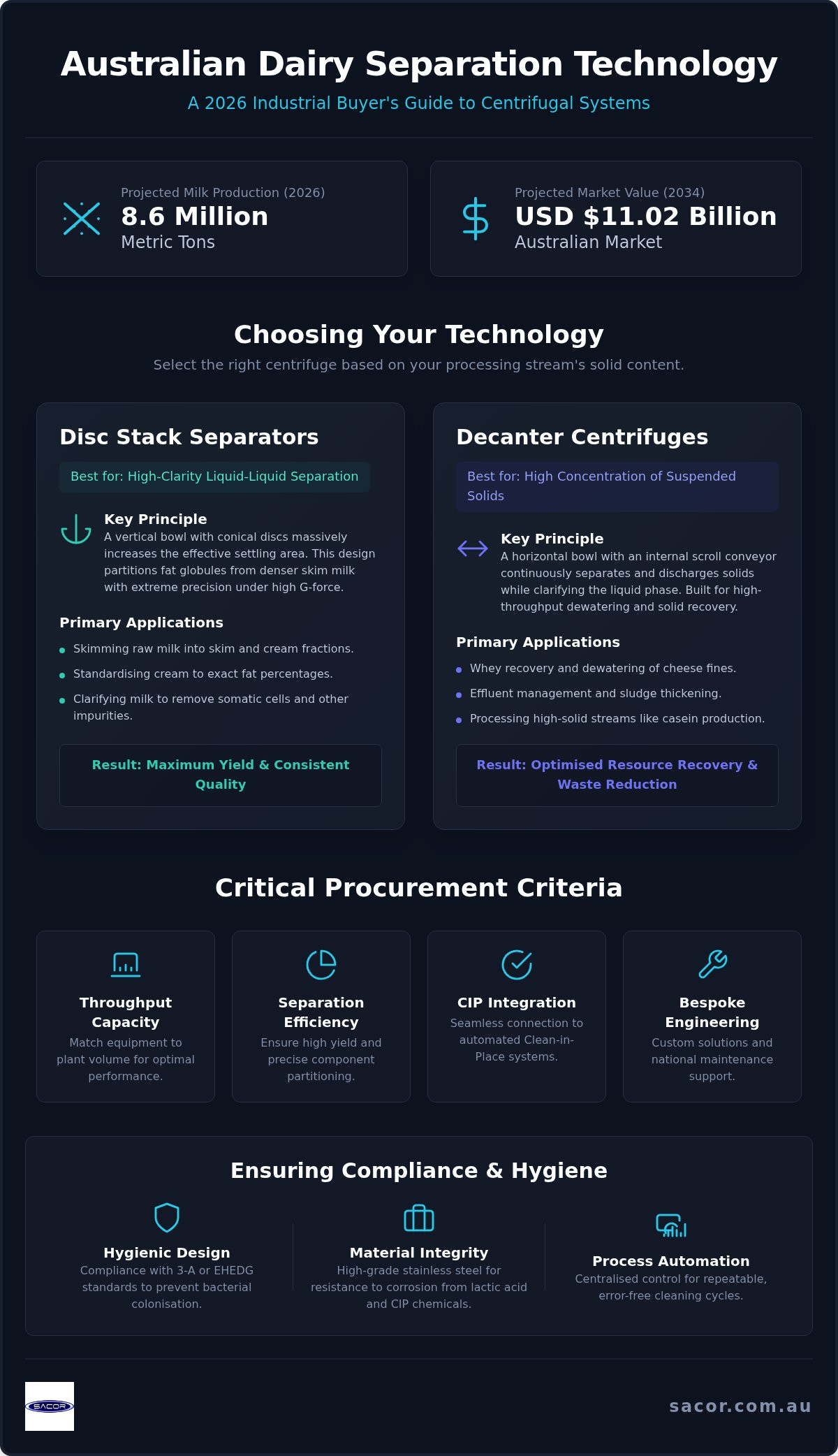
Choosing the right technology hinges on the specific solids concentration of your dairy stream. While both systems use centrifugal force, their mechanical architectures serve distinct purposes. Disc stack separators excel at high-clarity liquid-liquid separation. Conversely, decanter centrifuges are the preferred choice for processing streams with a high percentage of suspended solids. Understanding these differences is vital for any plant manager looking to invest in dairy separation equipment Australia to ensure the selected system matches the facility’s specific output requirements.
Disc Stack Separators: Precision for Liquid-Liquid Separation
The disc stack separator features a vertical bowl containing a series of conical discs. These discs significantly increase the effective settling area within a compact footprint. As the bowl spins, the heavier skim milk moves outward while the lighter fat globules migrate toward the centre. This technology is indispensable for applications requiring extreme precision, such as:
- Skimming raw milk to produce skim and cream fractions
- Standardising cream to exact fat percentages
- Clarifying milk to remove somatic cells and fine impurities
Modern industrial units utilise self-cleaning mechanisms. These systems automatically trigger partial or total discharge of accumulated solids without stopping the machine. This ensures continuous operation and maintains the high hygiene standards required by Australian regulations. Because these units operate at high speeds, they provide the fine-tuned control necessary for premium product lines where consistency is the primary performance indicator. For plant managers seeking to move beyond generic equipment toward tailored configurations, understanding the full technical and commercial framework of disc separator industrial Australia selection is essential for maximising yield recovery and minimising operational downtime.
Decanter Centrifuges: Handling High Solids Dairy Streams
When the feed contains a high volume of solids, such as in lactose or casein production, a horizontal decanter centrifuge is the superior tool. Unlike the disc stack, the decanter uses a cylindrical bowl with an internal screw conveyor, or scroll. The scroll rotates at a slightly different speed to the bowl, continuously pushing settled solids toward the discharge end. This design allows the equipment to handle fluctuating feed concentrations without clogging or losing efficiency. Decanters are particularly effective for managing heavy dairy sludges and recovering valuable components from whey.
They provide a robust solution for processors who need to balance high-volume throughput with the recovery of dry solids. For plants managing complex streams, consulting with a partner like Sacor to optimise decanter centrifuge systems ensures the technology is matched to the specific rheology of the product. The trade-off between these two technologies is often a choice between clarity and solids capacity. Disc stacks provide the highest possible clarity for liquid phases but struggle if the solids load exceeds roughly 10%. Decanters manage much higher concentrations but may leave a small amount of residual turbidity in the liquid. Selecting the correct dairy separation equipment Australia requires a methodical assessment of your feed characteristics and final product specifications.
Key Applications: From Milk Clarification to Whey Recovery
The application of centrifugal force in the dairy industry has evolved beyond simple skimming. In modern facilities, the primary goal is the extraction of maximum value from every litre of raw milk. This begins with milk clarification, where disc stack separators remove somatic cells, bacteria clusters, and physical impurities that can compromise product shelf life. Following clarification, the standardisation process allows processors to adjust fat content with surgical precision, ensuring that liquid milk and cream meet exact consumer specifications or regulatory requirements. This level of control is fundamental for maintaining brand consistency in a competitive market.
For facilities managing complex waste streams, the adoption of three-phase centrifuge technology in Australian food processing has become a strategic necessity. These systems allow for the simultaneous separation of two liquid phases and one solid phase, which is particularly useful for recovering high-value fats and oils from process by-products. Selecting the right dairy separation equipment Australia enables plants to transform traditional waste into profitable secondary revenue streams, directly supporting the industry’s shift toward sustainable industrial practice.
Whey Processing and Protein Recovery
Whey was once considered a low-value byproduct of cheesemaking, but it’s now a cornerstone of the dairy protein market. Efficient whey processing starts with the removal of cheese fines, which are tiny particles of curd that can interfere with downstream equipment. Once these fines are removed, centrifugal defatting prepares the whey for ultrafiltration. This step is critical because any residual fat can foul the membranes used in protein concentration. By recovering these proteins and fats, processors significantly improve their resource recovery and reduce the organic load on wastewater treatment systems. The economic impact of this recovery is substantial, as it turns a potential disposal cost into a high-demand ingredient.
Casein and Lactose Production
Producing casein and lactose requires a different mechanical approach, often involving high-performance decanter centrifuges. In casein production, the decanter dewaters the curd to a precise moisture level, which is essential for efficient drying and long-term stability. Similarly, in lactose production, centrifuges separate lactose crystals from the mother liquor. Precise control over the moisture content in the final separated solid is vital; too much moisture increases drying costs, while too little can lead to product loss. This level of technical control ensures that Australian dairy processors can compete effectively in global ingredient markets while maintaining high standards of reliability and consistency.
Factors to Consider When Procuring Dairy Separation Equipment
Procuring industrial dairy separation equipment Australia requires a strategic shift from focusing on sticker prices to evaluating performance-based metrics. Throughput capacity must align with peak seasonal milk volumes to prevent production bottlenecks. Separation efficiency targets are equally vital, as even a minor percentage increase in fat recovery can translate into significant annual revenue gains across the plant’s lifecycle. Precision in these early stages ensures that every drop of raw product is utilised to its full potential, which is the cornerstone of sustainable industrial practice.
Seamless integration into existing centralised control systems allows for real-time monitoring of vibration, temperature, and flow rates. This connectivity ensures that the centrifuge operates within its designed parameters, protecting the longevity of the machine. Compatibility with automated Clean-in-Place (CIP) systems is a prerequisite for maintaining hygiene without excessive manual intervention. Systems that don’t integrate well often lead to increased labour costs and higher risks of contamination.
Evaluating Total Cost of Ownership (TCO)
Evaluating the Total Cost of Ownership (TCO) involves a methodical analysis of power, water, and chemical consumption. High-efficiency motors and water-saving discharge mechanisms reduce the environmental footprint while lowering daily operational costs. Precision in the initial separation phase also reduces the load on downstream filtration and drying processes, which further decreases energy expenditure. Selecting specialised decanter centrifuges for food processing in Australia ensures that the equipment is engineered for the specific rheology of local dairy streams, providing the reliability required for continuous production.
Maintenance and Spare Parts Availability
Proximity to local technical support is the most effective safeguard against unplanned downtime in the Australian dairy environment. High-speed rotating equipment operates under extreme mechanical stress, making a structured maintenance schedule essential for preventing catastrophic failure. A reliable national supply chain for common wear parts, such as seals and bearings, ensures that routine servicing is completed promptly. Without local support, a simple seal failure can result in weeks of lost production. Prioritising a partner with a proven track record in the Australian market is a strategic decision that protects your capital investment. For processors seeking to future-proof their operations, you can view our range of spare parts and technical support services to ensure your dairy separation equipment Australia remains at peak performance.
Customised Separation Solutions with Sacor Australia
Selecting dairy separation equipment Australia requires more than just high-quality hardware; it necessitates a partnership with a technical authority that understands the specificities of local feed characteristics. Sacor adopts a collaborative approach to designing centrifugal solutions, ensuring that every system is engineered to meet the unique rheological demands of a client’s production line. This process involves a detailed analysis of feed solids concentration, temperature profiles, and desired output clarity. By matching the mechanical architecture of a centrifuge to these specific variables, Australian operators can achieve higher yields while reducing the environmental impact of their processing activities.
Our commitment to sustainability is reflected in the precision of our engineering. We focus on optimising resource recovery, which allows processors to capture valuable proteins and fats that might otherwise be lost to waste streams. This results-focused methodology ensures that your investment contributes to a more efficient and responsible industrial practice, aligning with the growing national emphasis on waste reduction and resource conservation.
Engineering Excellence and Site Integration
Sacor works alongside plant engineers to ensure that new separation technology integrates seamlessly with existing infrastructure. This collaborative effort extends to the physical footprint of the equipment and its connection to centralised control systems. We provide comprehensive technical documentation and on-site commissioning support to guarantee that the transition to new technology is methodical and efficient. Our expertise in industrial decanter centrifuges across Australia allows us to navigate the complexities of large-scale site integration, providing a steady, grounded conviction that the technology will perform as specified from the day of installation.
National Support and Lifecycle Management
The reliability of high-capital industrial equipment depends on consistent, expert maintenance throughout its lifecycle. Sacor provides national coverage for technical support, offering structured maintenance contracts that protect your long-term investment. Our national spare parts supply chain ensures that critical components are available when needed, minimising the risk of prolonged downtime. We understand that the high-stakes nature of dairy processing leaves no room for equipment failure, which is why our support services are designed to be proactive rather than reactive.
We invite plant managers and procurement decision-makers to contact Sacor for a technical assessment of their current separation requirements. By working together, we can identify opportunities to improve process efficiency and ensure your facility remains at the forefront of the Australian dairy industry. Reach out to our team today to discuss how our customised centrifugal solutions can support your facility’s long-term goals for performance and reliability.
Future-Proofing Your Dairy Processing Infrastructure
Optimising your facility’s output requires a shift from viewing separation as a standard utility to treating it as a precision engineered process. We’ve explored how the choice between disc stack separators and decanter centrifuges depends entirely on your specific feed characteristics and desired clarity. By prioritising high-performance dairy separation equipment Australia, processors can achieve the dual goals of maximum yield and stringent hygiene compliance. These technical decisions directly impact your plant’s total cost of ownership and long-term sustainability.
Sacor stands as a specialist Australian supplier of decanter and disc stack systems, providing the deep domain expertise required for high-volume dairy processing. Our national installation and engineering support ensure that your customised solutions are integrated seamlessly and maintained for peak reliability. We invite you to request a technical consultation for your dairy separation requirements to discuss how bespoke centrifugal technology can transform your resource recovery. Partnering with a seasoned technical authority ensures your facility remains competitive and resilient in an evolving global market. We look forward to supporting your next phase of industrial growth.
Frequently Asked Questions
What is the difference between a milk clarifier and a milk separator?
A milk clarifier is designed to remove physical impurities, somatic cells, and bacteria clusters from raw milk without altering the fat content. In contrast, a milk separator partitions the milk into two distinct liquid phases: cream and skimmed milk. While both use centrifugal force, the internal disc configuration of a separator is specifically engineered to facilitate the migration of lighter fat globules toward the centre of the bowl.
How often does industrial dairy separation equipment require maintenance?
High-speed dairy separation equipment Australia requires a structured maintenance regime to ensure operational reliability. Daily inspections should focus on vibration levels and seal integrity, while major service intervals typically occur every 2,000 to 4,000 operating hours. Adhering to these schedules prevents catastrophic mechanical failure and ensures the centrifuge operates at peak efficiency. Local support from a partner like Sacor provides the necessary spare parts and technical expertise for these critical interventions.
Can a decanter centrifuge be used for cream separation?
Decanter centrifuges are not suitable for liquid-liquid cream separation because their mechanical design is optimised for removing suspended solids from liquids. Cream separation requires the high-clarity partitioning provided by the vertical disc stack separator. Decanters are instead utilised for high-solids dairy streams, such as dewatering casein curd or recovering lactose crystals from mother liquor, where a horizontal scroll is needed to continuously discharge settled solids.
What are the benefits of hermetic dairy separators?
Hermetic dairy separators operate in an entirely airtight environment, which prevents the intake of air during the separation process. This design eliminates product oxidation and foaming, protecting the delicate structure of milk proteins and fat globules. By preventing air contact, processors achieve a more stable product with a longer shelf life. Additionally, hermetic systems often reduce energy consumption by minimising air friction within the centrifuge bowl during high-speed rotation.
How do I determine the right centrifuge capacity for my dairy plant?
Determining the correct centrifuge capacity involves calculating your peak hourly milk intake and adding a 10% to 15% safety buffer for seasonal production peaks. It’s essential to consider the specific fat content and temperature of the feed, as these variables affect separation efficiency. Consulting with an engineering partner allows for a methodical assessment of your plant’s throughput requirements, ensuring the selected equipment can handle projected growth in Australia’s milk production.
Is it possible to integrate new separators into an old CIP system?
Integrating modern separators into legacy Clean-in-Place (CIP) systems is possible through customised engineering and control system retrofitting. The new equipment must be configured to match the flow rates and pressure requirements of your existing sanitation loops. Sacor specialises in site integration, ensuring that the automated cleaning cycles of the centrifuge synchronise perfectly with your plant’s centralised control infrastructure to maintain the highest food safety standards.
What materials are best for dairy separation equipment in Australia?
High-grade stainless steel, specifically 316L, is the industry standard for dairy separation equipment Australia due to its superior corrosion resistance. This material withstands the natural acidity of dairy products and the aggressive chemicals used during high-temperature CIP cycles. Using robust, food-grade materials ensures that the equipment remains free from crevices and pitting, which is vital for complying with Australian food safety regulations and preventing microbial contamination.
How does centrifugal separation improve whey protein recovery?
Centrifugal separation improves whey protein recovery by efficiently removing residual fat and cheese fines from the whey stream. Removing these components is a prerequisite for successful ultrafiltration, as they can otherwise foul the membranes and reduce processing capacity. By utilising high-speed separators, processors can capture valuable proteins that would otherwise be lost to the wastewater stream, significantly improving resource recovery and the overall economic viability of the facility.