
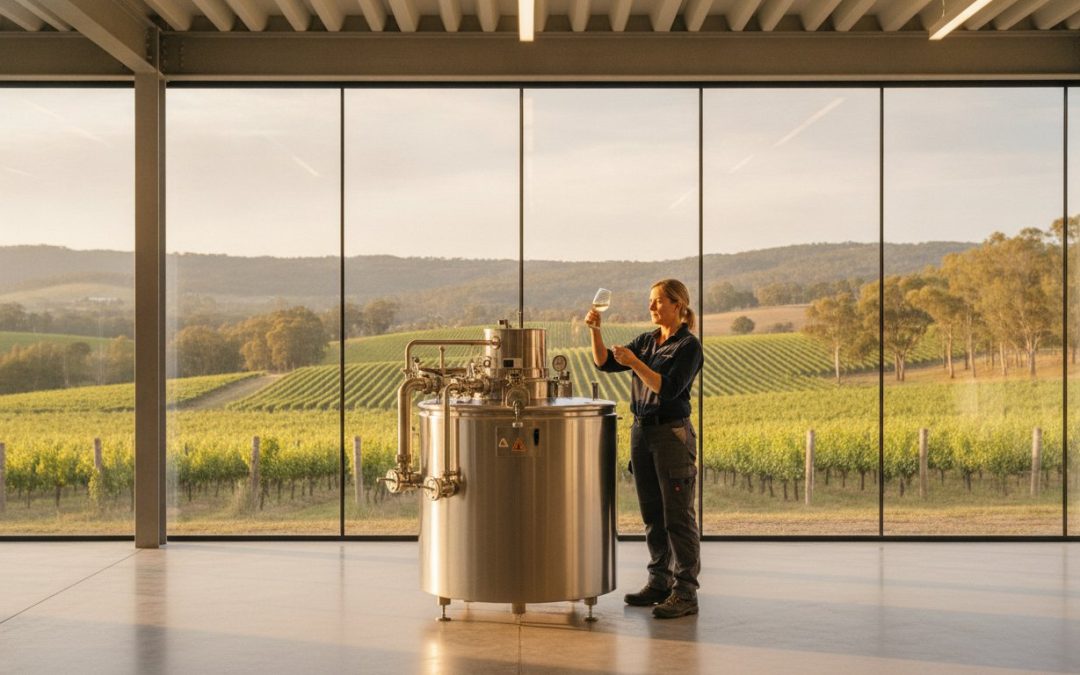
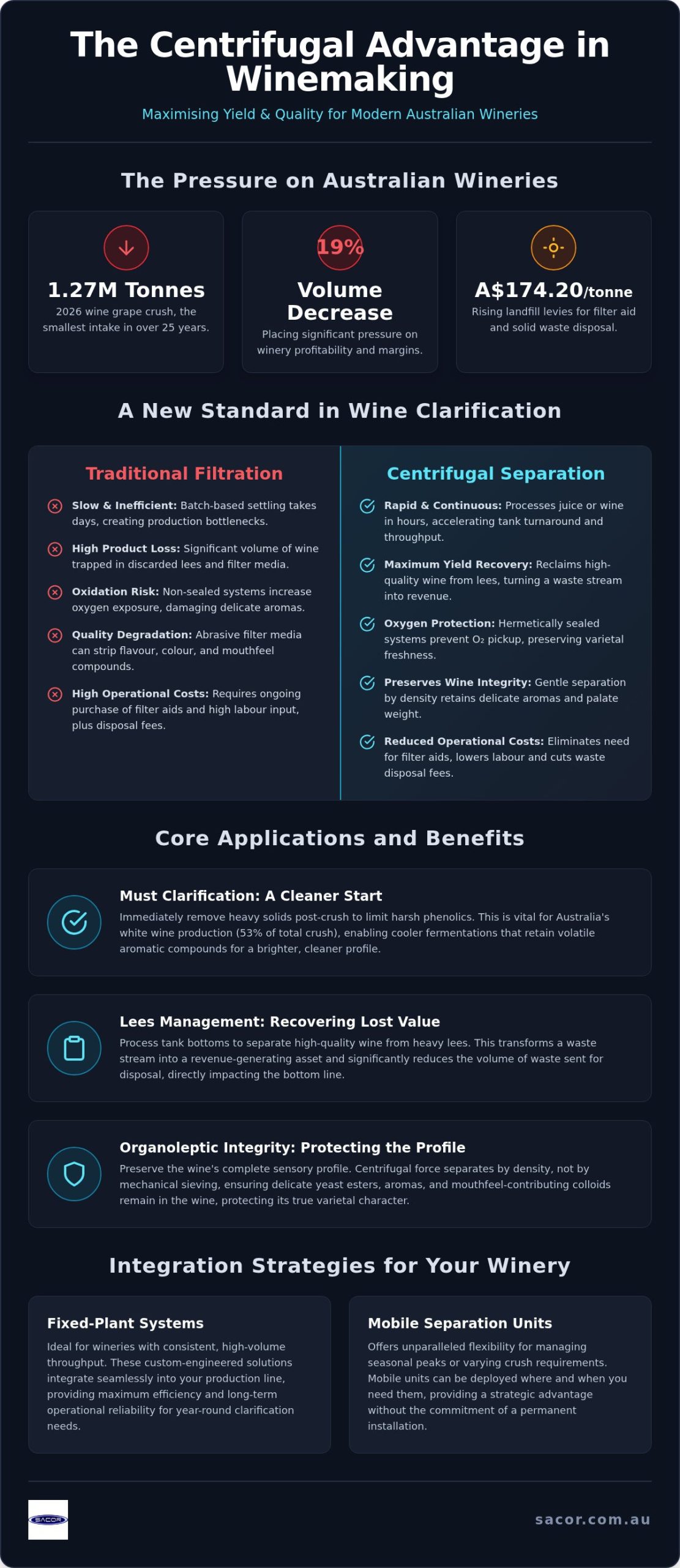
With the 2026 Australian wine grape crush falling to just 1.27 million tonnes, the smallest intake in over 25 years, every litre of juice recovered from the press has become a critical asset for winery profitability. You’re likely feeling the pressure of this 19% decrease in volume, alongside rising landfill levies that now reach A$174.20 per tonne for filter aid disposal. It’s a challenging environment where traditional manual filtration often results in unacceptable product loss and increased oxidation risks.
Investing in a wine clarification centrifuge Australia wide provides a strategic path to reclaim lost margins by maximising yield and preserving the delicate profiles of your varietals. This guide explores how advanced centrifugal separation technology optimises wine recovery and manages lees with surgical precision. We will examine the technical shift from diatomaceous earth to high-speed separation, focusing on how precision engineering reduces waste and accelerates tank turnaround times during the high-pressure vintage period.
Key Takeaways
- Modernise your production by moving from batch-based settling to continuous centrifugal clarification, which accelerates tank turnaround and enhances overall winery throughput.
- Protect the integrity of your varietals through hermetically sealed systems that minimise oxygen exposure and provide precise temperature regulation during high-speed separation.
- Evaluate the significant cost advantages of a wine clarification centrifuge Australia wide compared to traditional filtration, specifically regarding the reduction of labour, filter aid disposal fees, and product loss.
- Determine the most effective integration strategy for your facility by assessing the benefits of fixed-plant systems versus mobile separation units based on your seasonal crush requirements.
- Secure long-term operational reliability by choosing custom-engineered separation solutions backed by national maintenance support and readily available spare parts.
The Role of Centrifugal Separation in Modern Australian Winemaking
Centrifugal separation involves the application of high-speed rotational force to isolate grape solids, yeast, and lees from juice or wine. In the 2026 vintage, where the national crush has contracted to 1.27 million tonnes, the industry has seen an accelerated shift from traditional batch settling to continuous clarification. This evolution is driven by the need for greater process control and the elimination of the downtime associated with static cold settling. A clarification and stabilization of wine strategy that utilises a wine clarification centrifuge Australia wide allows producers to process fruit at peak quality without waiting days for solids to drop.
Speed is essential for maintaining the bright, vibrant fruit profiles that define Australian varietals. While some winemakers previously feared that high centrifugal speeds might “bruise” the wine, modern systems are engineered for exceptionally gentle product handling. Hermetically sealed designs prevent oxygen pickup, while precision-controlled discharge mechanisms ensure that the delicate organoleptic properties of the wine remain intact. This technology provides a consistent result regardless of the initial solids concentration, which is a major advantage over unpredictable batch methods.
Must Clarification: Starting with Clean Juice
The primary objective of must clarification is the immediate removal of heavy solids following the crush. Rapidly reducing the solids content to a specific target level limits the extraction of harsh phenolics and bitter compounds from skins and seeds. This precision is particularly vital for white wine production, which now accounts for 53% of the total Australian crush. By achieving clean juice within hours rather than days, winemakers can initiate cooler fermentations that better retain volatile aromatic compounds. During difficult vintages where fruit may arrive with higher-than-average solids, centrifugal separation provides a reliable method to maintain consistency and quality across the entire intake.
Lees Management and Product Recovery
Lees consist of dead yeast cells, grape particles, and tartrates that accumulate during fermentation and aging. If left unprocessed, these solids represent a significant financial loss. Utilising a wine clarification centrifuge Australia based wineries can recover high-quality wine from tank bottoms that would otherwise be discarded. Decanter centrifuge systems effectively separate the liquid from the heavy lees, turning a waste stream into a revenue-generating product. This approach also supports sustainable industrial practice by reducing the volume of waste sent to treatment plants. With landfill levies in major industrial states reaching A$174.20 per tonne in 2026, the ability to minimise solid waste directly impacts the bottom line while improving environmental outcomes.
Preserving Wine Quality: Aromas, Flavours, and Organoleptic Integrity
Maintaining the sensory profile of a vintage requires more than just removing solids; it necessitates the protection of the wine’s chemical equilibrium. Research supported by Wine Australia indicates that the physical handling of wine during clarification significantly impacts its longevity and market value. A significant sensory opportunity lies in the quality of wine recovered from lees. Historically, recovered wine was seen as inferior due to the oxidation inherent in older recovery methods. When using a wine clarification centrifuge Australia based producers can reclaim this fraction without compromising its organoleptic integrity, allowing it to be integrated back into premium tiers rather than being downgraded to bulk.
While traditional pressure-based filtration can strip away delicate yeast esters and mouthfeel-contributing colloids, centrifugal separation operates on the principle of density difference rather than mechanical sieving. This distinction ensures that the structural integrity and palate weight of the wine remain preserved. By avoiding the abrasive nature of some filter media, the wine retains its natural character and varietal definition.
Oxygen Management and Redox Potential
Oxidation is the primary threat to the freshness of aromatic white varieties like Sauvignon Blanc and Riesling. Modern centrifugal systems utilise hermetically sealed designs to eliminate the air-liquid interface, effectively preventing the browning associated with oxygen exposure. By employing inert gas blanketing, such as nitrogen or carbon dioxide, producers can maintain the wine’s redox potential at optimal levels. This proactive approach to gas management ensures that volatile thiols and delicate floral notes are not lost to the atmosphere during the high-speed separation phase.
Fine Clarification and Yeast Removal
Achieving microbial stability early in the cellar cycle reduces the reliance on heavy sulfur additions and intensive downstream processing. High-speed disc-stack separators excel at fine polishing, removing spoilage organisms and yeast cells with surgical precision. Unlike decanter centrifuges, which are better suited for heavy solids, disc separators provide the brilliant clarity required for final bottling with minimal passes. To understand how to select the right disc stack configuration for your specific throughput and clarity requirements, the disc separator industrial Australia strategic selection guide provides a comprehensive technical and commercial framework. This efficiency reduces the mechanical stress on the wine, ensuring that the finished product retains its intended character. For winemakers looking to optimise these outcomes, exploring beverage processing separation solutions can provide the technical framework needed for superior quality retention.
Controlling temperature is another critical factor during high-speed operation. While the friction of the bowl can generate heat, advanced engineering incorporates cooling jackets or high-efficiency motors to keep the wine within a tight temperature range. This prevents the “cooked” flavours often associated with poorly managed mechanical processes. By balancing centrifugal force with thermal and atmospheric control, these systems deliver a level of organoleptic consistency that traditional batch methods simply cannot match.
Centrifuge vs. Traditional Filtration: A Performance Comparison
Traditional batch-based filtration often creates a bottleneck in the cellar, particularly when processing speeds must keep pace with a rapid intake schedule. Modern wineries are increasingly moving away from these labour-intensive methods in favour of continuous centrifugal clarification. While a plate and frame filter requires significant downtime for setup, teardown, and cleaning between batches, a wine clarification centrifuge Australia wide operates as a continuous process. This ensures that juice or wine moves through the production line without interruption, allowing winemakers to manage peak vintage flows with far greater efficiency.
The operational flexibility of centrifugal technology is another major advantage. A single machine can be adjusted to handle everything from heavy must clarification to fine polishing before bottling. This versatility reduces the need for multiple types of filtration equipment and simplifies the overall cellar workflow. By consolidating these processes, producers can achieve consistent clarity across different wine styles while maintaining a smaller equipment footprint.
Eliminating Diatomaceous Earth (DE) and Earth Waste
Moving away from traditional filter aids like diatomaceous earth (DE) provides immediate health, safety, and environmental benefits. DE presents significant respiratory risks due to silica dust, requiring strict handling protocols that complicate cellar operations. By transitioning to an “earth-less” clarification method, wineries create a cleaner and safer working environment for their staff. From a sustainability perspective, the reduction in solid waste is substantial. With landfill levies for the 2025-2026 financial year reaching A$174.20 per tonne in major industrial states, the cost of disposing of spent filter cake has become a significant overhead that centrifugal separation effectively eliminates.
Yield Optimisation and ROI
The financial case for centrifugal technology is built on the foundation of superior product recovery. Traditional filtration media inevitably trap a portion of the wine, leading to unavoidable losses. In contrast, centrifugal separation maximises liquid recovery by tightly compacting solids before discharge. Consider the following performance metrics:
- Increased Recovery: Achieving even a 2% increase in yield across a 5,000-tonne crush translates to an additional 100,000 litres of wine available for sale.
- Reduced Processing Stages: High-efficiency clarification reduces the load on downstream fine filters, extending the life of expensive membranes.
- Labour Savings: Automated separation systems require minimal supervision, allowing cellar staff to focus on other critical tasks during 24/7 vintage operations.
These efficiencies contribute to a rapid return on investment, especially when considering the rising costs of labour and waste management. By automating the clarification process, wineries don’t just save time; they ensure a more predictable and repeatable outcome for every tank processed.
Implementing Centrifuge Technology in Your Australian Winery
Successfully integrating a wine clarification centrifuge Australia wide requires a precise evaluation of your facility’s peak operational demands rather than just its average throughput. The 2026 vintage demonstrated that even with a smaller national crush of 1.27 million tonnes, harvest windows are becoming increasingly compressed. This concentration of fruit intake places immense pressure on cellar infrastructure. Selecting the correct separation technology involves balancing your immediate tonnes-per-hour requirements with the long-term goal of process automation and waste reduction.
Beyond the machine itself, winemakers must account for the supporting technical infrastructure. High-speed separation systems require dedicated power supply, consistent water pressure for seal cooling, and seamless integration with existing Clean-In-Place (CIP) regimes. A well-planned installation ensures that the centrifuge functions as a central component of the cellar workflow, rather than a standalone bottleneck.
Sizing for the Australian Vintage
Australian climates often lead to rapid ripening and heat-stressed fruit, which results in higher-than-average solids in the must. When sizing equipment, it’s vital to choose a system that can handle these high-solids years without a significant drop in flow rate. Decanter centrifuges are generally the preferred choice for heavy must clarification and lees recovery due to their ability to handle high cake loads. In contrast, vertical disc separators are better suited for fine polishing and yeast removal. Future-proofing your investment means selecting a machine that can accommodate potential vineyard expansions or shifts toward higher-solids white wine production, which now represents 53% of the total crush.
Operational Maintenance and Local Support
Reliability is the most critical factor during the high-stakes period of the crush. Because the vintage window is so narrow, even a few hours of downtime can lead to significant backlogs and potential fruit spoilage. Partnering with a supplier that provides local Australian support and 24/7 technical standby is essential for maintaining operational continuity. This relationship should extend beyond the harvest through a structured preventative maintenance programme during the off-season. Access to a comprehensive national inventory of spare parts ensures that any mechanical issues are resolved rapidly, mitigating the risks associated with international shipping delays. For wineries seeking a long-term technical partner, engaging with professional maintenance and technical support services ensures your equipment remains a reliable asset for many seasons to come.
Whether you choose a fixed-plant installation for maximum efficiency or a mobile unit for multi-site flexibility, the goal remains the same: a robust, reliable system that delivers consistent clarity under pressure. By focusing on precision engineering and local support, Australian winemakers can navigate the challenges of modern production with confidence.
Sacor’s Customised Separation Solutions for the Wine Industry
Sacor operates as a dedicated technical partner rather than a mere equipment vendor, providing sophisticated wine clarification centrifuge Australia solutions that are tailored to the specific operational demands of local producers. By focusing on beverage-grade stainless steel separation systems, we ensure that every installation meets the rigorous hygiene and performance standards required for premium wine production. Our approach is grounded in a commitment to sustainable industrial practice, helping wineries minimise their environmental footprint while simultaneously recovering the maximum possible value from every vintage.
Choosing the right separation technology requires an understanding of both the immediate harvest pressures and the long-term strategic goals of the winery. We work alongside plant managers and procurement teams to deliver systems that integrate seamlessly into existing cellar workflows, ensuring that the transition to automated clarification is both efficient and reliable.
Engineering for Efficiency
Our engineering process begins with matching centrifuge specifications to your unique wine styles and throughput requirements. Whether your focus is on high-volume white wine production or the delicate handling of alternative red varieties, we customise the separation parameters to protect the organoleptic integrity of your product. This collaboration extends to winery engineers to ensure that the physical installation, power requirements, and CIP integration are handled with precision. To support ongoing operational success, we provide comprehensive technical documentation and hands-on training for winery staff, empowering your team to achieve the best possible results from the technology.
National Support Network
The strength of our partnership is underpinned by a robust national infrastructure designed to mitigate the risks of downtime during the critical vintage period. Having Australian-based expertise means that technical assistance is never far away, providing the peace of mind that international suppliers often struggle to match. Our commitment to reliability includes a comprehensive inventory of spare parts and a proactive maintenance programme that keeps your equipment in peak condition year-round. This local presence is vital for ensuring that your wine clarification centrifuge Australia continues to perform at its peak when the pressure is highest. We invite you to contact Sacor to discuss your winery’s separation requirements and discover how our customised solutions can optimise your production outcomes.
Securing Your Winery’s Competitive Edge
Transitioning to advanced separation technology is a strategic necessity for navigating the economic and environmental challenges of modern production. By prioritising the preservation of varietal integrity and the recovery of high-value wine from lees, you ensure your winery remains both competitive and efficient. Integrating a wine clarification centrifuge Australia wide allows for a cleaner cellar environment while significantly reducing the overheads associated with traditional filter aid disposal.
Sacor is an Australian-owned and operated partner, specialising in high-performance decanter centrifuges and disc separators. Our national technical support network and comprehensive spare parts inventory are designed to keep your production moving throughout the critical harvest window. We deliver custom-engineered solutions that align precisely with your specific wine styles and throughput goals. Precision matters in every drop.
Enquire about Sacor’s Beverage Separation Solutions today to discuss your facility’s requirements. We’re ready to help you build a more profitable and sustainable future for your next vintage.
Frequently Asked Questions
Does a centrifuge ‘bruise’ the wine or strip its flavour?
Modern separation systems do not bruise wine; they protect it through hermetically sealed bowls and hydro-hermetic inlets that prevent oxygen pickup. By eliminating the air-liquid interface and controlling mechanical shear, the centrifuge preserves delicate yeast esters and volatile thiols. This engineering ensures that the organoleptic profile remains intact while achieving superior clarity. It is a significant advancement over older, open systems that risked oxidation and flavour loss during high-speed processing.
Can a centrifuge replace all filtration steps in my winery?
A centrifuge replaces the bulk and primary filtration stages but is rarely the final step before bottling. While it effectively removes the majority of yeast and solids, most wineries still require a final membrane or sterile filtration pass to ensure absolute microbial stability. However, by using a wine clarification centrifuge Australia based producers can significantly extend the life of these expensive final filters, reducing the total number of passes and overall media costs.
What is the difference between a decanter centrifuge and a disc separator for wine?
The primary difference lies in solids-handling capacity. Decanter centrifuges are horizontal machines designed to process high-solids streams like heavy must and tank bottoms. Disc separators are vertical units featuring a stack of conical discs that create a massive clarification area, making them ideal for fine polishing and removing smaller particles like yeast cells. For a detailed breakdown of how to evaluate and select the right disc separator industrial Australia configuration based on G-force requirements and feed characteristics, our 2026 strategic selection guide provides the technical framework needed. Choosing between them depends on whether your priority is heavy solids removal or achieving brilliant final clarity.
How much wine can I actually recover from lees using a centrifuge?
You can typically recover between 80% and 95% of the wine previously trapped in your lees. By using high centrifugal force to compact the solids, the machine extracts clear, high-quality wine that would otherwise be lost to the waste stream. This recovered fraction often retains enough quality to be blended back into premium tiers, directly improving your bottom line by turning a disposal cost into a revenue-generating product.
Is a centrifuge cost-effective for a medium-sized Australian winery?
Yes, the return on investment for a medium-sized facility is driven by increased yield and the elimination of diatomaceous earth costs. With landfill levies rising to A$174.20 per tonne in 2026, the savings on waste disposal alone are substantial. When combined with a 2% to 5% increase in total wine recovery, the capital expenditure often pays for itself within a few vintages, especially for wineries processing over 1,000 tonnes.
What are the power and utility requirements for installing a wine centrifuge?
Installation requires a stable 3-phase power supply and a consistent source of potable water for seal cooling and the CIP system. Because these machines operate at high speeds, they also require a reinforced level floor or a dedicated structural plinth to manage operational vibrations. Integrating the unit into your winery’s existing SCADA or control system is also recommended to allow for automated monitoring and the precise management of discharge cycles.
How does a centrifuge help with sustainability and environmental compliance?
Centrifuges enhance sustainability by eliminating the need for single-use filter aids like diatomaceous earth, which are hazardous to handle and expensive to bury. This shift significantly reduces the winery’s solid waste volume and helps meet the standards set by the PFAS National Environmental Management Plan 3.1 regarding industrial discharge. Furthermore, the continuous nature of the process often uses less water for cleaning compared to the multiple teardown cycles required by traditional filters.
Can I use the same centrifuge for both must clarification and lees recovery?
While it is technically possible to use a single wine clarification centrifuge Australia wide for both tasks, efficiency will vary. A decanter centrifuge is the versatile choice for wineries needing to handle both heavy must and lees recovery due to its robust solids-handling capabilities. However, if your primary goal is fine clarification before bottling, a disc stack separator is the superior tool. We often recommend customised configurations that allow for maximum flexibility.