

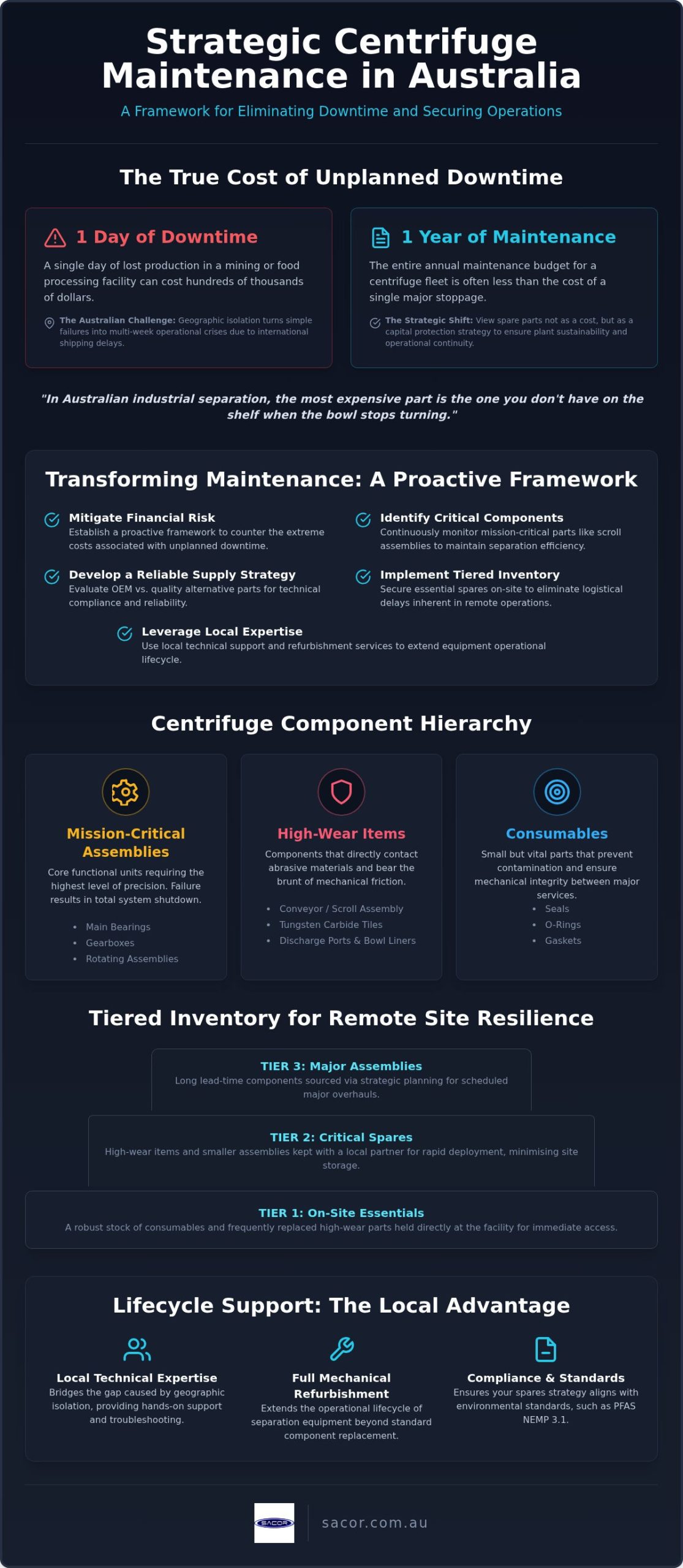
A single day of unplanned downtime in a mining or food processing facility often costs more than the annual maintenance budget of the entire centrifuge fleet. For Australian plant managers, the primary risk isn’t just mechanical wear; it’s the geographic isolation that turns a simple bearing failure into a multi-week operational crisis. You likely already know that waiting for international shipments while production sits idle is an unsustainable way to operate.
By implementing a structured approach to sourcing industrial centrifuge spare parts Australia and optimising your inventory, you can transform your maintenance from a reactive burden into a strategic advantage. This guide outlines how to manage critical components and navigate international lead times while securing the local technical support necessary for peak performance. We will examine how to align your spares strategy with the latest environmental standards, such as the PFAS NEMP 3.1, to ensure your operation remains both compliant and efficient. You’ll gain a clear framework to reduce operational risk and maintain high-performance separation efficiency across your entire site.
Key Takeaways
- Establish a proactive maintenance framework to mitigate the extreme financial risks associated with unplanned downtime on Australian industrial sites.
- Identify and monitor mission-critical components, such as conveyor and scroll assemblies, to maintain consistent separation efficiency and mechanical integrity.
- Develop a reliable supply strategy for industrial centrifuge spare parts Australia by evaluating the technical compliance and reliability of OEM versus quality alternative components.
- Implement a tiered inventory management system to secure essential spares and eliminate the logistical delays inherent in remote site operations.
- Leverage local technical expertise and full mechanical refurbishment services to extend the operational lifecycle of your separation equipment.
The Critical Role of Industrial Centrifuge Spare Parts in Australian Operations
Industrial centrifuge spare parts Australia are the critical components that maintain the delicate balance between high-speed rotation and mechanical safety. These parts include everything from precision-engineered bearings and seals to the high-wear tiles on the conveyor. Industrial Centrifuges operate under extreme mechanical stress, where even a minor failure in a secondary component can compromise the entire separation process. Maintaining these assets requires a deep understanding of how individual components contribute to the overall fluid dynamics and solid discharge efficiency. Without a strategic supply of quality spares, the risk of unplanned downtime increases exponentially. On Australian sites, these components must withstand environmental extremes, ranging from the corrosive humidity of coastal processing plants to the abrasive, high-temperature conditions of remote mining operations.
Why ‘Off-the-Shelf’ Isn’t Enough for Australia
Using non-specified or generic components in a high-G environment introduces unacceptable risk. A decanter centrifuge bowl rotating at several thousand RPM possesses immense kinetic energy; therefore, any part that doesn’t meet exact metallurgical specifications can lead to catastrophic mechanical failure. Local technical support is vital to bridge the gap caused by Australia’s geographic isolation. The risk is real. Relying on a partner who understands the industrial decanter centrifuge Australia market ensures that components are matched to the specific feed characteristics of local materials, such as abrasive iron ore or complex wastewater streams. This alignment between part specification and application is the foundation of operational reliability.
The Cost of Downtime vs. The Cost of Inventory
In a 24/7 processing environment, the true cost of a centrifuge failure extends far beyond the price of a replacement bearing. It encompasses lost production volume, idle labour, and the potential for upstream process bottlenecks. For many Australian operations, a single day of lost production can equate to hundreds of thousands of dollars in missed revenue. Viewing spare parts as a capital protection strategy rather than a simple procurement expense changes the financial logic of the warehouse. In Australian industrial separation, the most expensive part is the one you don’t have on the shelf when the bowl stops turning. Investing in a robust inventory of high-wear items is a direct contribution to the sustainability of the plant, as it prevents the resource-intensive restarts and waste generation associated with sudden system shutdowns.
Core Components: Identifying High-Wear and Mission-Critical Spare Parts
Effectively managing a centrifuge requires a clear hierarchy of components based on their wear rates and operational impact. We categorise these into three distinct groups: consumables, high-wear items, and mission-critical assemblies. Consumables like seals and O-rings are small but vital; they prevent the catastrophic contamination of bearing housings and gearboxes. High-wear items, such as the conveyor scroll and discharge ports, bear the brunt of mechanical friction during every hour of operation. Finally, mission-critical assemblies like main bearings and gearboxes require the highest levels of precision. When sourcing industrial centrifuge spare parts Australia, procurement teams must prioritise components that meet exact metallurgical standards to ensure long-term reliability and mechanical integrity.
The Decanter Centrifuge: Rotating Assembly Components
The conveyor, or scroll, is the heart of the solids transport system. In applications involving decanter centrifuge mining Australia, abrasive ores can quickly erode the scroll flighting. This necessitates the use of tungsten carbide tiles or specialised hard-surfacing to maintain separation performance. Protecting the bowl liners and discharge ports is equally essential to prevent structural thinning of the rotating assembly over time. Modern maintenance strategies now include vibration sensors and monitoring equipment as essential spares. These ‘smart’ components provide real-time data, allowing operators to detect bearing wear or imbalance before it leads to a total system seizure. Identifying these needs early allows for better planning of specialist maintenance support.
Drive Systems and Control Spares
Consistent torque transfer depends entirely on the condition of drive belts and pulleys. While these are often overlooked, a slipping belt reduces separation efficiency and increases energy consumption. On the electrical side, Variable Frequency Drive (VFD) components and PLC modules are the brains of the operation. These electronic spares are particularly susceptible to the heat and dust common in Australian industrial sites. The industry is shifting toward spares with integrated diagnostic capabilities, which simplify the troubleshooting process for local technicians. Keeping a stocked supply of these modules ensures that a minor electrical fault doesn’t result in days of lost production while waiting for a replacement to arrive from an international warehouse.
Navigating the Australian Supply Chain: OEM vs. Quality Alternative Parts
High-speed separation technology demands a level of precision where every micron matters. Choosing industrial centrifuge spare parts Australia involves a complex trade-off between the perceived savings of alternative components and the technical certainty of OEM specifications. In a machine where the bowl rotates at several thousand RPM, even a minor deviation in part tolerance can disrupt the centrifugal balance. This imbalance generates harmonic vibrations that accelerate bearing wear and can lead to premature gearbox failure. All components used on Australian industrial sites must comply with relevant Australian Standards for mechanical integrity and safety. Sacor bridges this gap through rigorous engineering oversight, ensuring that every part supplied maintains the original design intent and the operational safety margins of the system.
The Risks of Sub-Standard Components
The false economy of cheap components is most evident in high-stakes environments like a wastewater treatment centrifuge Australia facility. Consider the failure of a simple lip seal. While the part itself is inexpensive, a sub-standard seal can allow process fluid to migrate into the main bearing housing. This contamination degrades the lubricant, leading to a seized bearing and potential destruction of the housing itself. Beyond the mechanical damage, sub-standard parts pose significant safety risks. In pressurised separation systems, a component failure can result in the uncontrolled release of hazardous materials or mechanical projectiles. Sacor prioritises mechanical reliability by verifying the metallurgical properties and manufacturing tolerances of every component before it reaches the site.
Sourcing Strategy for 2026
In the current 2026 industrial landscape, procurement officers must evaluate suppliers based on their technical support capabilities rather than just part numbers. International shipping volatility and strict biosecurity regulations for imported machinery continue to create lead-time delays. Relying on local warehousing is no longer a luxury; it’s a necessity for operational continuity. When sourcing critical components, it’s essential to verify material certificates and ensure parts meet the updated IChEMS Register requirements for chemical handling where applicable. A robust sourcing strategy involves partnering with a provider that maintains a local inventory of genuine spares and offers the engineering expertise to install them correctly. This local presence ensures that technical specialists are available to troubleshoot issues, reducing the reliance on overseas support and shortening the path to full production recovery. For a structured approach to component categorisation and supplier evaluation, the centrifuge spare parts Australia industrial maintenance checklist provides a practical framework aligned with 2026 compliance requirements.
Strategic Inventory Management: Minimising Downtime on Remote Industrial Sites
Operating in remote regions of Australia necessitates a move away from just-in-time procurement toward a tiered inventory model. This system categorises industrial centrifuge spare parts Australia into three distinct levels: critical items like bearings and seals, fast-moving components such as belts, and insurance spares including complete gearboxes or bowls. By utilising operational data from vibration analysis and hour-meter readings, plant managers can predict part failure with high accuracy. Data drives the schedule. This approach allows for the timing of orders to coincide with planned shutdowns rather than reacting to a failure. Properly managing industrial centrifuge spare parts Australia in the warehouse is as important as the installation itself. Seals and bearings stored in high-ambient temperatures without climate control will lose their operational integrity before they even reach the machine. Fine dust in the outback can penetrate standard packaging, while thermal cycling in non-insulated sheds causes condensation inside bearing races.
Step-by-Step: Building Your Spares Strategy
- Step 1: Conduct a full audit of existing centrifuge assets and their current wear state to establish a baseline for future needs.
- Step 2: Identify long lead items that must be held in-country or on-site to bypass international supply chain volatility and biosecurity delays.
- Step 3: Establish a relationship with a technical partner like Sacor to secure engineering support and access to Service Exchange programs.
- Step 4: Implement a digital tracking system for part usage and replacement intervals to automate reordering before stock levels become critical.
Optimising Spares for Specific Industries
Inventory requirements vary significantly across Australian sectors. For energy sector centrifuge equipment, reliability is non-negotiable, requiring a deep stock of insurance spares to prevent multi-million dollar production halts. In sludge dewatering centrifuge Australia operations, the focus shifts to high-wear items like scroll tiles and discharge ports that face constant abrasion from grit. Beverage and dairy processors must manage food-grade spare parts, ensuring all elastomers and lubricants meet strict hygiene standards. Facilities processing agricultural by-products and animal waste streams can benefit from reviewing the latest agriculture separation equipment Australia strategies to ensure their spares inventory aligns with the specific wear profiles of these high-solids applications. Service Exchange programs for gearboxes and back-drives offer a significant advantage here, allowing for the immediate replacement of complex assemblies while the original unit is refurbished off-site. To ensure your site is prepared, you can contact Sacor for a comprehensive spare parts audit.
Lifecycle Support and Maintenance: The Sacor Approach to Spare Parts Supply
Sacor’s approach to industrial centrifuge spare parts Australia extends beyond simple procurement to encompass complete lifecycle management. We provide full mechanical refurbishment services that restore high-capital equipment to its original design specifications. Our technicians possess a deep understanding of the specific feed characteristics found across the continent, from abrasive Western Australian iron ore to the complex sludge profiles in national wastewater networks. By integrating spare parts supply into structured preventative maintenance contracts, we ensure that the right components are available exactly when the maintenance schedule demands them. This proactive alignment reduces the risk of emergency failures and supports a more sustainable industrial practice through targeted equipment life extension.
Refurbishment vs. Replacement
Deciding whether to overhaul a centrifuge bowl or invest in a new unit is a significant capital decision. Overhauling becomes the logical choice when the structural integrity of the bowl remains intact but high-wear surfaces have reached their service limits. Sacor’s refurbishment process involves stripping the assembly to its core components and restoring it to near-new condition using genuine industrial centrifuge spare parts Australia. This approach provides a substantial financial advantage over new equipment purchases while significantly reducing the environmental footprint of the operation. Participating in this circular equipment economy allows plants to maintain high separation efficiency without the lead times or costs associated with manufacturing entirely new rotating assemblies.
Partnering for Performance
We work directly alongside plant engineers to optimise separation outcomes and refine maintenance intervals based on actual site performance. This collaborative model ensures that every part replacement is backed by full technical documentation and professional commissioning support. Access to this level of engineering expertise allows for the fine-tuning of the centrifuge to handle changing feed conditions, ensuring long-term reliability. Our commitment to results means we don’t just supply a part; we ensure it contributes to the overall stability and performance of your separation process. Contact Sacor Australia to discuss your centrifuge maintenance and spare parts strategy.
Securing Operational Continuity in Australian Separation
Effective centrifuge maintenance in the Australian industrial landscape requires a shift from reactive repairs to a disciplined, tiered inventory strategy. By identifying mission-critical components early and understanding the technical risks of sub-standard alternatives, plant managers can protect their high-capital assets from the extreme costs of unplanned downtime. Managing your supply of industrial centrifuge spare parts Australia is no longer just a warehouse function; it’s a strategic necessity for maintaining separation efficiency and environmental compliance across both remote and metropolitan sites. The integration of local technical expertise and mechanical refurbishment ensures that your equipment remains a high-performing asset throughout its entire operational lifecycle.
Sacor provides the steady, grounded conviction of an Australian-owned and operated partner with specialist technicians serving all major industrial sectors. We offer national support that bridges the gap between geographic isolation and technical excellence, ensuring your facility remains productive and compliant. Secure your centrifuge uptime with Sacor’s national spare parts and maintenance support. We look forward to working alongside your team to build a more resilient and sustainable industrial operation.
Frequently Asked Questions
What are the most common spare parts needed for a decanter centrifuge?
The most common industrial centrifuge spare parts Australia requires include main bearings, conveyor bearings, and various elastomer components such as seals and O-rings. High-wear items like discharge bushings and tungsten carbide scroll tiles are also frequently replaced due to abrasive friction. Drive belts and lubricant filters are essential consumables. Keeping these items in stock ensures that routine maintenance doesn’t turn into an extended period of unplanned downtime during critical production cycles.
How long do centrifuge bearings typically last in Australian mining conditions?
Bearing lifespan depends on rotational speed, material load, and lubrication consistency, but typically ranges from 8,000 to 15,000 operational hours. In harsh Australian mining environments, abrasive dust and extreme ambient temperatures can accelerate wear. Regular vibration analysis and temperature monitoring are essential to detect early fatigue. Replacing bearings before they reach the point of failure protects the main shaft and housing from catastrophic mechanical damage that is far more costly to repair.
Can I use non-OEM spare parts without affecting my centrifuge’s performance?
Using non-OEM parts introduces technical risks related to material specifications and manufacturing tolerances. While they might appear cost-effective, slight deviations in weight or dimensions can disrupt the high-speed centrifugal balance, leading to increased vibration and shortened bearing life. Sacor manages this risk through rigorous engineering oversight, ensuring that any alternative components provided meet the exact mechanical requirements necessary to maintain the integrity and safety of your separation system under high-G loads.
What is the typical lead time for industrial centrifuge parts in Australia?
Lead times vary significantly based on whether the component is held in local inventory or requires international shipment. Locally stocked items are often available within days, while complex assemblies from overseas can take several weeks or months due to global logistics volatility and strict Australian biosecurity regulations. We recommend holding a site-based inventory of critical items to bypass these delays and ensure your operation remains resilient against international supply chain disruptions.
How often should I perform a full internal inspection of my centrifuge bowl?
A full internal inspection should occur every 2,000 to 4,000 operational hours, or at least annually, depending on the abrasiveness of your process feed. High-solids applications in mining or wastewater require more frequent checks of the bowl liners and scroll flighting. These inspections allow you to identify erosion patterns early, enabling you to plan for hard-surfacing repairs or part replacements during scheduled shutdowns rather than reacting to a sudden mechanical failure.
Do you provide on-site technical support for installing complex spare parts?
Specialist technical support is available for the installation of complex assemblies such as gearboxes, main bearings, and rotating groups. Our technicians provide on-site commissioning to ensure that new industrial centrifuge spare parts Australia are correctly aligned and balanced within the machine. This service includes full technical documentation and performance verification, giving plant managers the assurance that their equipment has been restored to its optimal operating parameters by qualified separation experts.
What is a ‘service exchange’ for centrifuge gearboxes?
A service exchange involves replacing your worn gearbox or back-drive with a fully refurbished unit from our inventory. This model allows for an immediate swap during a scheduled shutdown, eliminating the weeks of downtime required for a traditional strip-and-repair process. Your original unit is then taken off-site for refurbishment to near-new condition using genuine spares, supporting a circular equipment economy and ensuring continuous production for your facility without long-term interruptions.
How can I improve the wear life of my centrifuge scroll flights?
Improving the wear life of scroll flights involves a combination of metallurgical protection and process optimisation. Applying tungsten carbide tiles or specialised hard-surfacing to the leading edges of the flighting provides a robust barrier against abrasive solids. Additionally, ensuring that the feed rate and polymer dosage are correctly calibrated reduces unnecessary friction. Regular inspections help identify when these protective layers need refreshing before the underlying structural steel of the conveyor is compromised.