
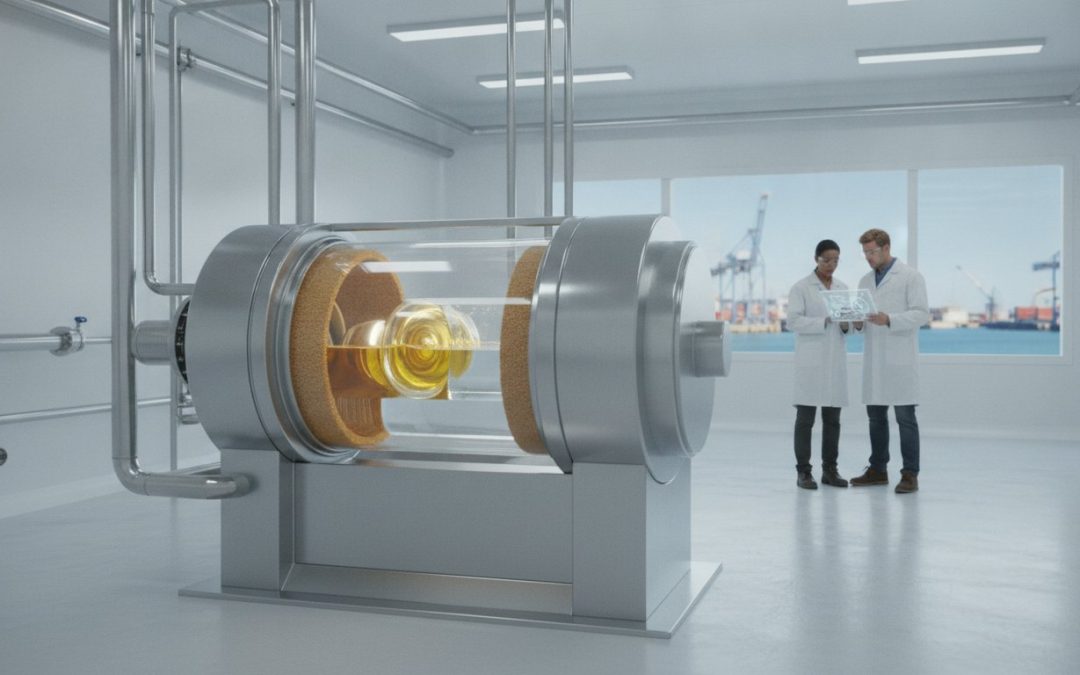
With global fish meal prices reaching as high as USD $2,630 per metric ton in July 2026, every kilogram of protein lost to waste isn’t just a process inefficiency; it’s a direct hit to your bottom line. Most Australian rendering plant managers recognise the frustration of high moisture content driving up drying costs, or abrasive fish bones and scales causing frequent, costly downtime. You understand that maintaining oil clarity is essential for protecting market value, yet achieving that consistency often feels like a constant battle against ageing equipment and rising energy prices.
Integrating a high-performance fish meal centrifuge separator into your production line transforms these operational hurdles into a distinct competitive advantage by optimising protein recovery and ensuring premium oil quality. We will explore how advanced three-phase separation technology and robust wear protection are helping Australian operations reduce waste, lower operational costs, and align with the 2026 environmental reporting guidelines for the fisheries sector. By shifting from traditional pressing to precision centrifugal separation, your facility can secure higher yields while meeting the stringent sustainability standards required in the modern market.
Key Takeaways
- Understand how transitioning from traditional screw presses to precision decanter technology enhances protein recovery and improves overall meal quality.
- Evaluate the mechanical advantages of three-phase tricanters for simultaneous oil, water, and meal separation to streamline your production line.
- Learn to reclaim nutrient-rich “fines” from stick water using a fish meal centrifuge separator, turning potential waste into a high-value revenue stream.
- Discover essential maintenance protocols and hard-facing techniques that protect your equipment from the abrasive wear caused by fish bones and scales.
- Align your rendering operations with 2026 sustainability mandates by implementing separation solutions that reduce moisture content and lower drying costs.
The Role of Fish Meal Centrifuge Separators in Modern Rendering
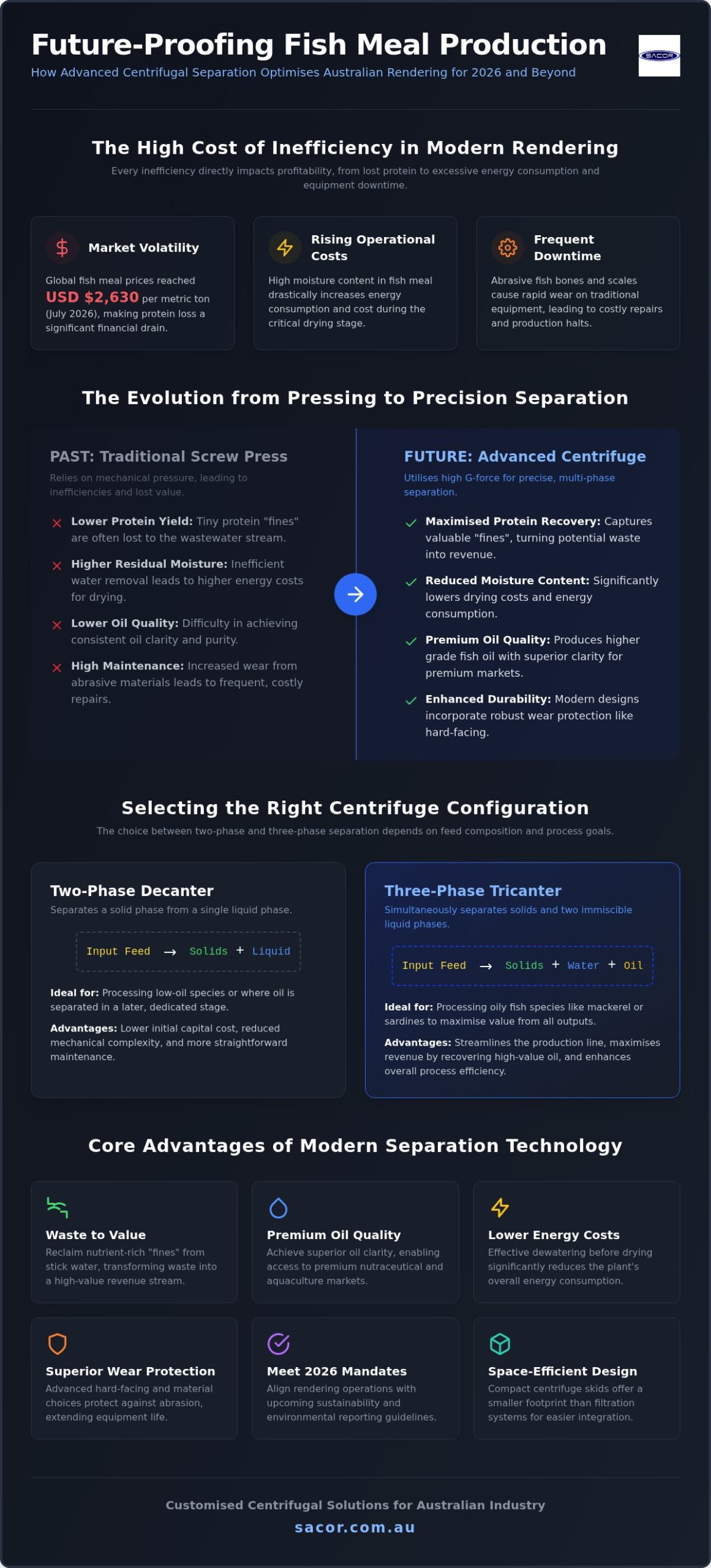
In the context of 2026 industrial standards, the fish meal centrifuge separator is no longer an optional upgrade; it is the fundamental mechanism for ensuring plant profitability. This technology utilises a horizontal decanter centrifuge to process cooked fish mass, effectively isolating solids, oil, and water with a level of precision that traditional equipment cannot match. While older facilities once relied heavily on screw presses, the industry is rapidly transitioning toward centrifugal solutions to capture value that was previously lost to effluent streams. This shift represents a move away from simple volume reduction toward sophisticated, high-value product recovery. The fish meal centrifuge separator now serves as the heart of a modern, efficient rendering plant in 2026, ensuring that every gram of raw material is converted into a marketable asset.
The Economic Impact of Precision Separation
Precision in separation translates directly to operational savings and increased revenue. By effectively reducing the moisture content in the fish meal before it enters the drying stage, plants can significantly lower their energy consumption. With global fish meal prices reaching USD $2,630 per metric ton in mid-2026, even a minor increase in protein recovery yields substantial financial returns. Additionally, the ability to produce a higher grade of fish oil with superior clarity allows processors to command premium prices in the nutraceutical and aquaculture markets. Efficient solid-liquid separation also reduces the volume of waste sent to effluent treatment, helping facilities comply with the increasingly stringent Australian environmental discharge standards.
Centrifugal Force vs. Traditional Filtration
Traditional filtration and screw pressing rely on mechanical pressure or gravity, both of which are limited by the physical characteristics of the fish mass. In contrast, centrifugal force achieves separation at speeds that are impossible to replicate with older methods. The high G-force generated within the bowl is essential for capturing “fines”, which are tiny protein particles that would otherwise bypass screens and end up in the wastewater. Beyond performance, the physical footprint of the processing plant is often a constraint for Australian operators. Compact centrifuge skids offer a much smaller footprint than sprawling filtration systems, allowing for easier integration into existing rendering lines without requiring extensive structural modifications. This combination of high-precision recovery and spatial efficiency makes the centrifuge the superior choice for modern industrial separation.
Two-Phase vs. Three-Phase Centrifuges: Selecting the Right Configuration
Selecting the appropriate configuration for a fish meal centrifuge separator is a critical engineering decision that dictates the long-term profitability of a rendering facility. The choice depends largely on the feed composition, specifically the oil content of the species being processed and the desired clarity of the final products. While both systems utilise high-speed rotation to achieve separation, their internal mechanics differ to accommodate specific process goals. Understanding these differences is essential for anyone involved in the production of fish meal and oil, as the wrong setup can lead to excessive downstream processing or lost revenue. Engineers must evaluate throughput requirements alongside feed characteristics to determine which technology offers the best return on investment.
When to Use a Two-Phase Decanter
A two-phase decanter is designed to separate solids from a single liquid phase. This configuration is often the preferred choice for Australian plants processing low-oil species or those focused solely on meal recovery where oil separation happens in a separate, dedicated stage. Because they have fewer internal components, two-phase systems typically offer a lower initial capital cost and reduced mechanical complexity. This simplicity makes them an excellent option for smaller rendering operations that require reliable performance without the need for simultaneous three-phase separation. Maintenance is generally more straightforward, which helps keep operational costs predictable over the life of the machine.
The Advantages of Three-Phase Tricanters
For operations processing oily fish or varied feedstocks, a three-phase fish meal centrifuge separator provides a significant performance advantage. These machines simultaneously separate dewatered meal, high-purity fish oil, and stick water in a single continuous pass. This capability eliminates the need for several secondary separation stages downstream; it reduces the overall plant footprint and lowers energy requirements. Tricanters are particularly effective at handling the fluctuating feed characteristics common in Australian fisheries, ensuring consistent product quality even when the raw material varies. The ability to recover high-grade oil in one step directly enhances the market value of your output.
Strategic planning is required to ensure these systems integrate seamlessly into existing workflows. Reviewing the latest guidance on agriculture separation equipment Australia can help plant managers align their technology choices with current 2026 efficiency benchmarks. Investing in the correct configuration ensures that your facility can maximise yield while maintaining compliance with environmental discharge standards. If you’re unsure which configuration fits your specific feed profile, contacting a technical specialist can provide the clarity needed to make a confident investment.
Maximising Yield: Protein Recovery and Stick Water Treatment
Stick water represents a significant portion of the raw material mass, yet it’s frequently treated as a waste byproduct rather than a revenue source. This nutrient-rich liquid contains dissolved proteins, minerals, and fine suspended solids that traditional screening methods simply cannot capture. By implementing a high-performance fish meal centrifuge separator, Australian rendering plants can reclaim these “fines” before the liquid proceeds to evaporation or discharge. This recovery doesn’t just increase the total volume of meal produced; it directly reduces the organic load on wastewater treatment systems. This helps facilities stay within the strict environmental discharge limits mandated by Australian state regulators while capturing value that would otherwise be lost to the drain.
Capturing High-Value Protein Fines
The efficiency of solids recovery relies heavily on precise torque control and advanced bowl geometry. Modern decanters use sophisticated drive systems to maintain consistent cake dryness, ensuring that the recovered protein fines are dewatered enough to be blended back into the primary meal stream without increasing drying costs. Advanced bowl designs prevent the “washout” of valuable solids during fluctuating feed rates. This level of control is essential for maintaining a high final protein percentage, which is the primary driver of market value for fish meal. For a deeper technical analysis of these processes, refer to our comprehensive guide on the rendering plant centrifuge.
Oil Polishing for Premium Markets
While the decanter handles the bulk separation, achieving the clarity required for premium export markets often necessitates a secondary polishing stage. Disc-stack separators are frequently employed to remove the final traces of residual moisture and microscopic impurities from the oil. This step is critical because moisture is a primary catalyst for oil oxidation. By stripping these impurities, processors can produce a stable, high-clarity oil that meets international export standards. Premium fish oil, particularly for the nutraceutical sector, commands a significantly higher price than standard feed-grade oils. This makes secondary separation a high-return investment for plants looking to diversify their revenue streams. Implementing these refined separation steps ensures that every component of the fish mass is utilised to its highest economic potential.
Operational Excellence: Wear Protection and Australian Maintenance
High-capacity fish meal processing in Australia involves handling materials that are inherently destructive to rotating machinery. Fish bones, scales, and incidental sand create a highly abrasive environment within the bowl of a fish meal centrifuge separator. Without robust protection, these materials can erode the scroll and bowl surfaces rapidly, leading to a loss of separation efficiency and increased vibration. High-capacity rendering plants typically require major service intervals every 4,000 to 8,000 operating hours, though this frequency can increase if the feedstock contains high levels of abrasive mineral content. Ensuring your equipment is fitted with tungsten carbide tiling and hard-facing on the scroll flights is essential for maintaining consistent performance throughout these intervals.
Advanced Wear Protection Strategies
Customising material selection is a prerequisite for long-term reliability. If the feedstock has high acidity, selecting specific stainless steel alloys for the bowl and scroll prevents corrosion-assisted wear. Replaceable wear liners and bush inserts at the solids discharge points allow for cost-effective maintenance; you can replace specific components rather than the entire assembly. Modern systems also incorporate vibration monitoring sensors that act as an early warning system. These sensors detect subtle changes in balance caused by wear or buildup, allowing plant managers to schedule maintenance before a catastrophic failure occurs. This proactive approach is particularly relevant given the 2026 trend toward “smart” centrifuges with remote monitoring capabilities.
Local Support and Technical Documentation
Reliability is underpinned by the availability of local expertise and inventory. Accessing industrial centrifuge spare parts Australia ensures that critical components like bearings, seals, and tiles are available without the delays associated with international shipping. A supplier must provide comprehensive technical documentation that aligns with Australian site standards to facilitate safe and efficient servicing by local teams. Commissioning support from engineers who understand the specific nuances of the Australian rendering market ensures the system is optimised for your unique feed profile from day one. Organising a structured preventative maintenance schedule is the most effective way to hit 2026 uptime targets and protect your capital investment.
To discuss a tailored maintenance plan or audit your current separation efficiency, contact our technical support team for professional assistance.
Sacor: Customised Centrifugal Solutions for Australian Industry
Sacor provides the technical expertise and robust equipment necessary to meet the demanding requirements of Australian rendering operations. As a premier supplier based in Western Australia, we deliver customised centrifugal solutions to plant operators nationwide, ensuring that every installation is matched to the specific feed characteristics of the local catch. A fish meal centrifuge separator is a high-capital investment; its success depends on precise engineering rather than off-the-shelf components. We partner with our clients from the initial design phase through to long-term maintenance, focusing on increasing process efficiency while reducing operational costs. This collaborative approach allows us to anchor our technical innovation in the practical, real-world outcomes that plant managers require to remain competitive in a global market.
Bespoke Engineering and Design
Successful separation starts with a detailed analysis of the raw material. Our engineers evaluate factors such as bone content, scale density, and feedstock acidity to determine the optimal bowl speed and torque settings for each application. This level of customisation ensures that the fish meal centrifuge separator can handle the abrasive nature of Australian fish stocks without premature wear or loss of precision. We design our centrifuge skids to integrate seamlessly into existing plant infrastructure, minimising the need for major structural changes or lengthy shutdowns during the installation phase. By considering future scalability during the design process, we ensure that your facility remains capable of handling increased production volumes as your business grows and market demands shift.
Comprehensive Lifecycle Support
Technical excellence must be supported by reliable field services to ensure long-term reliability. Our team of experienced Australian technicians provides on-site installation and commissioning support to ensure every system operates at peak performance from the first day of service. Access to a national network for spare parts and technical advice reduces the risk of extended downtime, protecting your production schedule and bottom line. We help Australian plants achieve world-class separation efficiency by providing the technical documentation and maintenance programmes required to meet 2026 industrial standards. This commitment to lifecycle support transforms a simple equipment purchase into a long-term partnership focused on sustainable industrial practice, resource conservation, and consistent profitability for the Australian rendering sector.
Securing Future Profitability in Australian Rendering
Maximising the value of every catch requires a shift from traditional processing to precision engineering. By integrating a high-performance fish meal centrifuge separator, your facility can effectively reclaim nutrient-rich protein fines and produce premium-grade oil that meets international export standards. We have explored how the correct configuration and advanced wear protection directly influence your plant’s operational costs and environmental compliance. These technical advancements are essential for navigating the rising costs and stringent reporting standards of 2026.
Sacor stands as a trusted, Australian-owned partner with specialised expertise in agricultural and animal product separation. We provide full lifecycle support from bespoke design through to national spare parts supply, ensuring your technology remains a reliable asset for years to come. Our national service coverage ensures that technical assistance is available whenever your operation requires it.
Investing in these advanced separation systems secures your facility’s place in a more efficient and sustainable industrial future.
Frequently Asked Questions
How does a fish meal centrifuge differ from a standard industrial decanter?
While the fundamental principle of high-speed rotation remains the same, a fish meal centrifuge separator is specifically engineered to withstand the abrasive and corrosive nature of cooked fish mass. These units typically feature specialised stainless steel alloys and enhanced wear protection, such as tungsten carbide tiling on the scroll. This customisation ensures the machine can manage the high-fat content and bone fragments without the rapid degradation often seen in general-purpose industrial decanters.
What is the typical moisture content of fish meal after centrifugal separation?
Efficient centrifugal separation typically results in a dewatered meal cake with a moisture content between 45% and 55%, depending on the species and feed temperature. Achieving this level of dryness is critical because it significantly reduces the thermal energy required in the final drying stage. By lowering the moisture load early in the process, Australian rendering plants can decrease their overall fuel consumption and improve the throughput of their existing drying equipment.
Can a centrifuge separator handle different species of fish in the same run?
Modern centrifuges are capable of processing mixed species, although performance is optimised when the feed characteristics remain consistent. Fluctuations in oil content or bone density between species can affect separation efficiency if the machine isn’t adjusted. Sacor engineers bespoke systems with variable bowl speeds and adjustable torque controls, allowing operators to fine-tune the separation process in real-time to accommodate the varied catches common in the Australian fishing industry.
What are the power requirements for a high-capacity fish meal centrifuge in Australia?
Power requirements vary based on throughput and the specific G-force required, but high-capacity units generally operate with main drive motors ranging from 45kW to 150kW. These systems often utilise variable frequency drives to optimise energy consumption during startup and operation. In Australia, these units are engineered to meet local electrical standards, ensuring they integrate safely into the existing power grid while maintaining the high torque necessary for heavy solids discharge.
How much oil can be recovered from stick water using a tricanter?
A three-phase tricanter can recover nearly all free oil from stick water, often reducing the residual oil content in the water phase to less than 1%. This recovery is highly efficient compared to traditional gravity tanks or secondary screens. By capturing this high-value oil in a single pass, processors can maximise their revenue streams while simultaneously reducing the organic load on their wastewater treatment systems, aiding in compliance with Australian environmental discharge limits.
What maintenance is required to prevent wear from fish bones and scales?
Maintenance focuses on the regular inspection and replacement of wear-resistant components such as tungsten carbide tiles and hard-faced scroll flights. Because fish bones and scales are highly abrasive, these parts act as sacrificial layers that protect the main structure of the centrifuge. Operators should also monitor vibration levels and perform routine bearing lubrication. Sacor provides national support and spare parts supply to ensure that these critical maintenance tasks don’t lead to extended downtime.
Is it possible to automate the centrifuge separation process for 24/7 operation?
Automation is a standard feature in 2026, with sophisticated control systems allowing for continuous operation. These systems monitor feed rates, torque levels, and vibration in real-time, automatically adjusting parameters to maintain optimal separation efficiency. While Sacor does not offer a 24/7 emergency breakdown response, our automated systems are designed for high reliability and can be integrated with plant-wide SCADA systems to provide remote monitoring and predictive maintenance alerts for Australian industrial operators.
How does centrifugal separation impact the protein content of the final meal?
Centrifugal separation positively impacts protein content by capturing fines that are typically lost during traditional pressing or screening. These recovered solids are high in protein and are blended back into the meal cake, increasing the total protein percentage of the final product. Because high-protein meal commands a premium price in global markets, the precision offered by a fish meal centrifuge separator directly enhances the economic value of the rendering plant’s output.