
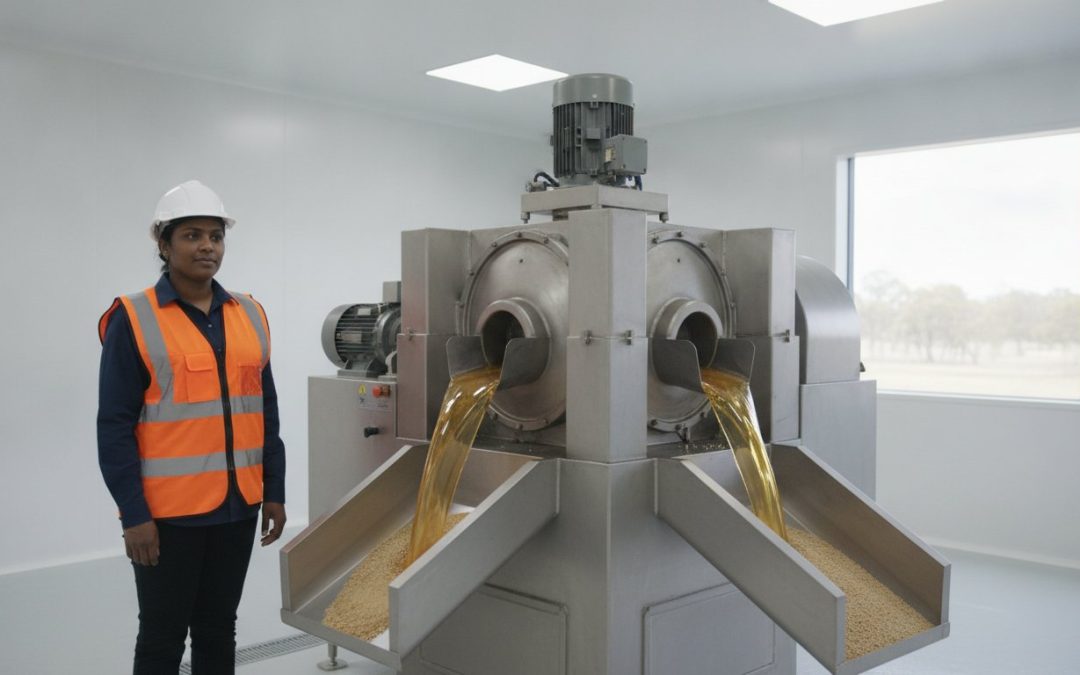
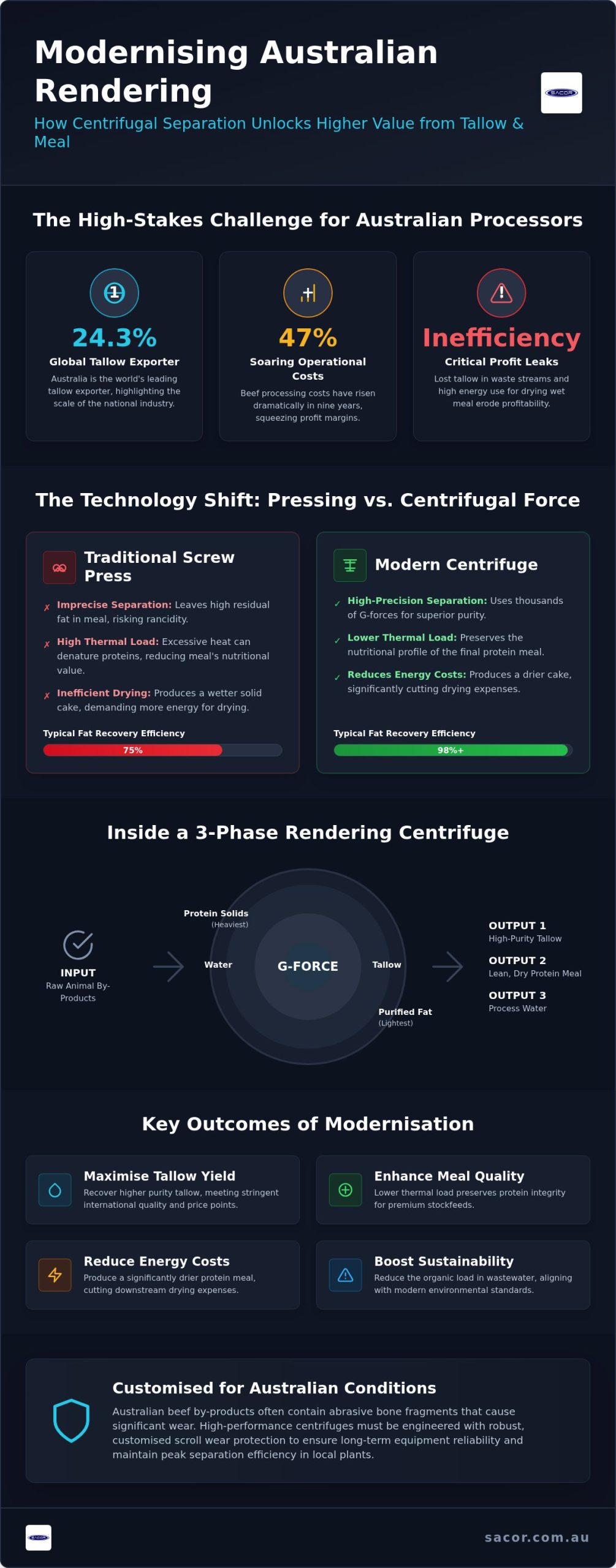
Australia is the leading global exporter of tallow, accounting for 24.3% of world exports in 2025, yet many local processors continue to lose significant revenue through inefficient separation. It’s a persistent challenge for plant managers to watch high-value tallow disappear into the waste stream or to face rising energy costs when meat meal moisture remains too high for efficient drying. You likely understand that in an environment where beef processing costs have risen by 47% over the past nine years, every percentage of yield recovery is vital for maintaining a competitive edge.
This guide demonstrates how a high-performance rendering plant centrifuge can transform these operational hurdles into consistent profit by recovering higher purity tallow and producing leaner, drier protein meals. You’ll learn the technical requirements for optimising three-phase separation and how custom engineering addresses the specific challenges of abrasive Australian feedstocks. We’ll also explore how modern centrifugal technology supports compliance with the AS5008:2007 hygienic rendering standards, ensuring your facility remains a trusted partner in the global supply chain.
Key Takeaways
- Understand why the transition from traditional mechanical screw presses to high-speed centrifugal separation is critical for modernising by-product facilities and improving extraction precision.
- Learn the technical distinctions between horizontal decanters and three-phase separators to determine the most efficient rendering plant centrifuge configuration for your specific tallow and meal targets.
- Discover how to integrate advanced separation into continuous wet rendering lines to lower moisture content in protein meals, which significantly reduces the energy required for final drying.
- Identify the key operational parameters, including bowl speed and differential speed, that must be adjusted to maintain high-value tallow recovery despite fluctuating feed characteristics.
- Recognise the importance of customised engineering for Australian plants to mitigate wear from abrasive bone fragments and ensure long-term equipment reliability.
The Role of Centrifugal Separation in Modern Australian Rendering
The Australian rendering (animal products) industry has evolved from a simple disposal method into a high-precision extraction sector. At the centre of this transformation is the rendering plant centrifuge, which serves as the primary engine for converting raw animal by-products into high-value commodities. For Australian processors, this shift is essential to maintain profitability in a market where beef tallow prices reached record highs of $1,320 per metric tonne in mid-2026. Precise separation is now the difference between a high-margin operation and one struggling with rising overheads.
Traditional methods relied heavily on mechanical screw presses. While functional, these systems often lack the precision required for modern quality standards. High-speed centrifugal separation uses thousands of G-forces to instantaneously separate materials based on their specific density. This process isolates fats, proteins, and water with a level of accuracy that physical pressing cannot match. It allows for a continuous, automated flow that handles large volumes with minimal manual intervention.
From Waste to Value: The Rendering Economy
The Australian rendering sector contributes approximately $1.5 billion in annual exports, driven largely by global demand for high-protein meat and bone meal (MBM) and tallow. Tallow has become increasingly critical as a feedstock for the global renewable fuel industry and premium stockfeeds. Efficient separation is no longer just about yield; it’s about meeting the stringent purity requirements of international buyers. By using a specialised rendering plant centrifuge, operators can reduce the environmental footprint of their facility. This is achieved by recovering more solids and reducing the organic load in wastewater, which aligns with the industry’s push towards circular economy practices and sustainable industrial standards.
Centrifugal Force vs. Traditional Pressing
Mechanical presses often leave a higher percentage of residual fat in the meal, which can lead to rancidity and lower market value. In contrast, centrifugal systems achieve superior fat recovery while maintaining a lower thermal load on the product. Excessive heat during prolonged pressing can denature proteins, reducing the nutritional profile of the final meal. Centrifuges also offer a significant advantage in moisture management. By producing a drier solid cake, they reduce the amount of energy required for downstream drying. This is a critical factor for Australian plants facing rising operational costs. A leaner, drier meal is more stable and cheaper to produce, ensuring the facility remains competitive against international peers.
Decanter Centrifuges vs. Three-Phase Separators: Technical Mechanisms
Selecting the correct configuration for a rendering plant centrifuge depends on the specific rheology of the raw material and the desired final product purity. While both decanter centrifuges and three-phase separators utilise centrifugal force, their internal architectures facilitate different separation outcomes. The North American Renderers Association notes that modern rendering relies on these mechanical processes to efficiently separate fat from water and solids. High-speed rotation generates G-forces that exploit density differences, forcing heavier protein solids to the bowl wall while lighter tallow and water migrate toward the centre.
The internal conveyor, or scroll, within a rendering plant centrifuge must be engineered to transport heavy, often abrasive, protein solids toward the discharge ports without causing excessive turbulence. If the scroll pitch or differential speed is misaligned, the separation efficiency drops. This leads to tallow carry-over in the solids or moisture retention in the meal. Customising these parameters is essential when handling Australian beef tissues, which often contain higher bone content than poultry counterparts, necessitating more robust scroll wear protection. The same engineering principles apply when deploying a fish meal centrifuge separator, where abrasive fish bones and scales present comparable wear challenges to scroll flights and discharge ports.
Two-Phase Decanters for Solid-Liquid Separation
Two-phase decanter systems are primarily utilised for clarifying fats or dewatering coagulated blood. These units focus on removing a high volume of solids from a single liquid phase. In meat and bone meal processing, managing high solids loads requires precise control over bowl speed. Increasing the bowl speed maximises G-force, which results in a drier cake. This reduction in moisture is essential for lowering the energy required during the final drying stage. It’s a direct way to manage rising utility costs while ensuring the meal meets protein density specifications.
Three-Phase Systems for Tallow Recovery
Three-phase systems, often referred to as Tricanters, perform a more complex task by simultaneously separating tallow, water, and solids in a single pass. This is particularly effective in poultry and red meat fat melting lines where the goal is maximum tallow purity. The machine manages a liquid-liquid interface inside the bowl, ensuring that the oil and water phases exit through separate discharge paths via adjustable weir plates. Maintaining this interface is critical; any fluctuation can result in water contaminating the tallow or oil being lost in the wastewater stream.
For facilities looking to upgrade their current line, exploring customised decanter centrifuge systems can help identify the configuration that best suits your specific feed characteristics and yield targets.
Wet Rendering vs. Dry Rendering: Choosing the Right Extraction Method
The choice between wet and dry rendering determines the long-term energy profile and product quality of a facility. Dry rendering involves cooking raw material in its own fat to evaporate moisture, whereas wet rendering uses steam or hot water to release the fat at lower temperatures. A rendering plant centrifuge is the critical component in a wet rendering line, as it performs the primary separation of the liquid and solid phases. This mechanical approach is often more energy-efficient than thermal evaporation, as it removes the bulk of the water without the massive latent heat requirements of a traditional cooker. It’s a fundamental shift from boiling off water to spinning it out.
The Advantages of Continuous Wet Rendering
Continuous wet rendering is favoured for producing tallow with superior colour and lower free fatty acid (FFA) levels. Because the material isn’t subjected to high-temperature frying, the proteins remain more digestible and the fats stay lighter. In this setup, the centrifuge manages the “stick water” or process water phase. This liquid contains dissolved proteins and minerals that would otherwise be lost to the drain. By efficiently separating this phase, renderers can recover more value while reducing the chemical demand on wastewater treatment systems. Understanding the rendering process through this lens highlights why centrifugal separation has become the global standard for high-throughput poultry and edible fat lines. It reduces steam consumption across the plant lifecycle by minimising the volume of water that requires thermal treatment. Australian processors handling aquatic by-products can explore how these same principles are applied in a dedicated fish meal centrifuge separator to optimise protein recovery and oil clarity in marine rendering lines.
Centrifuge Integration in Dry Rendering Lines
While dry rendering often employs mechanical screw presses for the initial extraction, the resulting fat stream is rarely pure enough for international export markets. A rendering plant centrifuge is then used for secondary clarification or “polishing.” This step removes microscopic fines, which are suspended protein particles that can cause sediment in storage tanks and erode downstream pumps. These abrasive particles are particularly damaging to high-pressure injectors and valves in biofuel refineries. Integrating a high-speed centrifuge into a dry line allows processors to meet the stringent specifications required for biofuels and premium stockfeeds. It’s a strategic addition that protects equipment and elevates the market grade of the tallow. This dual-stage approach ensures that even traditional lines can achieve the purity levels expected in the 2026 market.
How to Optimise Tallow Recovery and Meal Quality
Optimising the performance of a rendering plant centrifuge requires a methodical approach to balancing mechanical settings with the fluctuating physical properties of the feedstock. Achieving maximum yield isn’t a static process; it requires active management of variables such as differential speed and temperature. For instance, fat viscosity decreases as temperature rises, which significantly accelerates separation speed and improves tallow clarity. Maintaining a consistent temperature between 90°C and 95°C before the material enters the bowl ensures the centrifuge can operate at its peak hydraulic capacity without compromising the purity of the discharge.
Step 1: Feed Preparation and Consistency
Precision begins before the material reaches the centrifuge. Standardising particle size through effective grinding is essential, as large fragments can cause internal turbulence and uneven cake formation. Fluctuating feed rates often lead to centrifuge surging, which disrupts the separation interface and results in tallow being lost in the solids discharge. By maintaining a steady, regulated feed, operators ensure that the centrifugal force is applied uniformly across the material. Pre-heating the feed also plays a critical role in reducing the internal friction of the slurry, allowing for a cleaner break between the oil and water phases.
Step 2: Adjusting Operational Parameters
Once the feed is stabilised, the operator must tune the torque control to manage cake moisture. High torque indicates a heavy solids load, which may require an increase in differential speed to evacuate the solids more quickly. Conversely, if the meal is coming out too wet, reducing the differential speed allows for a longer residence time and better dewatering. Pond depth represents the radial distance between the liquid surface and the discharge weir, serving as the primary control for balancing tallow clarity against solids dryness. Selecting the correct weir plate settings is vital for ensuring the liquid-liquid interface remains stable, preventing cross-contamination between the tallow and process water.
Step 3: Wear Management and Preventative Care
Australian rendering feeds are notoriously abrasive due to high bone content, which can lead to rapid erosion of the internal scroll. Identifying early signs of wear, such as increased vibration or a gradual drop in cake dryness, is essential for preventing catastrophic bearing failure. Hard-surfacing and the use of tungsten carbide tiles are standard requirements in the industry to protect the scroll flights. Scheduling regular internal inspections ensures that these protective layers are intact, preserving the machine’s balance and separation efficiency. For facilities needing expert oversight, our team provides comprehensive maintenance and technical support services to ensure your separation line remains operational and efficient.
Customised Separation Solutions for Australian Rendering Plants
Standard international equipment often struggles with the specific feedstocks found in the Australian market. A rendering plant centrifuge must be configured to handle high-density protein solids and varying fat contents typical of local sheep and beef processing. Sacor provides customised engineering that addresses these specific variables, ensuring that the system delivers consistent performance under local conditions. This bespoke approach is essential for renderers looking to integrate advanced agriculture separation equipment Australia into their broader operational strategy. We focus on the precision of the separation interface, which is critical for maintaining the high tallow purity levels demanded by the 2026 export market.
Engineering for Abrasive Australian Feeds
Australian feedstocks are often more abrasive than those found in European or North American contexts, primarily due to higher bone-to-meat ratios and specific slaughterhouse practices. We select specific materials and protective coatings, such as specialised tungsten carbide tiles and hard-surfacing, that can withstand high-temperature slurries without premature erosion. Scroll flights are customised to match the specific friction and transport characteristics of your protein solids, preventing the clogging that often plagues generic units. Every rendering plant centrifuge we supply is also engineered to meet Australian industrial safety and electrical standards, ensuring seamless integration into existing facility grids and compliance with local OHS regulations.
Long-Term Support and Maintenance
Reliability is built on more than just initial build quality; it requires a robust supply chain for ongoing maintenance and technical expertise. We maintain a comprehensive inventory of industrial centrifuge spare parts Australia to ensure that any necessary repairs don’t lead to extended downtime. This national availability is a strategic advantage for plants in regional areas where logistics can be challenging. Our commitment includes training your on-site teams to monitor vibration, torque, and pond depth effectively. This empowers your staff to make the minor adjustments that prevent major mechanical failures before they occur. As your throughput grows, we work alongside you to evolve your separation systems, ensuring your facility remains efficient and compliant with emerging environmental standards and the AS5008:2007 hygienic rendering requirements.
Securing Future Profitability Through Separation Excellence
The shift toward precision separation is a fundamental requirement for Australian processors aiming to remain competitive in an evolving global market. Moving beyond traditional mechanical pressing and adopting a precision-engineered rendering plant centrifuge allows facilities to capture higher yields of premium tallow while significantly reducing the energy burden of their drying lines. It’s a strategic transition that replaces thermal intensity with mechanical efficiency. Success in this sector depends on the careful calibration of operational parameters and the selection of equipment designed specifically for the abrasive nature of local feedstocks.
As an Australian-owned partner with deep domain expertise, we specialise in high-wear animal by-product applications and understand the unique challenges of regional processing environments. Our team provides national support for installation and maintenance, ensuring your facility achieves maximum lifecycle value and consistent reliability from its investment. Consult with Sacor for a customised rendering separation solution to refine your extraction process and secure your position at the forefront of the industry. We look forward to working alongside you to transform your processing efficiency and yield performance.
Frequently Asked Questions
What is the difference between a 2-phase and 3-phase rendering centrifuge?
A 2-phase rendering plant centrifuge separates solids from a single liquid phase, such as clarifying fat or dewatering blood. In contrast, a 3-phase system simultaneously separates solids, tallow, and process water. The 3-phase configuration is essential for facilities that require high-purity tallow recovery in a single pass, as it manages the liquid-liquid interface to prevent cross-contamination between the oil and water discharge streams. This allows for a more streamlined and efficient production flow.
How does a centrifuge improve the quality of meat and bone meal?
A centrifuge improves meal quality by achieving a more precise extraction of fats and moisture than mechanical pressing. By producing a leaner cake with lower residual fat, the system prevents meal rancidity and ensures higher protein concentration. This precision allows Australian processors to meet the strict nutritional specifications required for FeedSafe certified mills and ensures compliance with the AS5008:2007 hygienic rendering standards for premium export markets.
Can a centrifuge handle highly abrasive materials like bone and grit?
Modern centrifuges handle highly abrasive bone and grit by utilising specific wear protection on the scroll flights and discharge ports. These high-wear areas are typically armoured with tungsten carbide tiles or hard-surfacing to withstand the erosive forces of high-velocity solids. This engineering ensures the bowl remains balanced and the separation efficiency is maintained over long cycles, protecting the machine from the harsh physical characteristics of typical Australian rendering feedstocks.
What is the typical maintenance schedule for a rendering plant centrifuge?
A typical maintenance schedule includes daily checks of vibration levels and bearing temperatures to detect early mechanical stress. Major service intervals occur every 2,000 to 4,000 operating hours, focusing on grease replenishment and internal inspections of scroll wear protection. Comprehensive overhauls are scheduled every 8,000 to 12,000 hours, where seals, bearings, and hard-surfaced components are replaced to prevent unscheduled downtime and maintain the machine’s separation precision.
How does centrifugal separation reduce energy costs in rendering?
Centrifugal separation reduces energy costs by mechanically removing the bulk of the water from protein solids, which is far more efficient than thermal evaporation. Because the centrifuge produces a drier solid cake, the downstream dryers require significantly less steam and fuel to reach final moisture targets. This mechanical dewatering process bypasses the high latent heat requirements of traditional cookers, resulting in a lower carbon footprint and reduced utility expenses.
Is it possible to retrofit a centrifuge into an existing dry rendering line?
It’s entirely possible to retrofit a rendering plant centrifuge into an existing dry rendering line to replace or augment traditional screw presses. This integration often involves using the centrifuge as a secondary polisher to remove fine protein particles from the fat stream. This step ensures the tallow meets the stringent purity requirements for biofuel feedstocks and premium stockfeeds, protecting downstream equipment from erosion while elevating the market grade of the final product produced by the plant.
What are the most common causes of downtime for rendering centrifuges?
Common causes of downtime include bowl imbalance due to uneven solids build-up and accelerated wear on scroll flights from abrasive materials. Imbalance often leads to excessive vibration, while bearing failure can occur from inadequate lubrication or seal contamination. Implementing a proactive maintenance plan and maintaining a national supply of spare parts are the most effective ways to mitigate these risks and ensure continuous operation for the processing line.
How does feed temperature affect the efficiency of fat separation?
Feed temperature affects separation efficiency by altering the viscosity of the fats within the slurry. Higher temperatures, typically around 90 to 95 degrees Celsius, reduce fat viscosity and allow for a faster, cleaner separation of the oil phase from the water and solids. If the temperature is too low, the fat remains thick and clings to the solids, resulting in poor tallow recovery and higher residual fat levels in the final protein meal.