
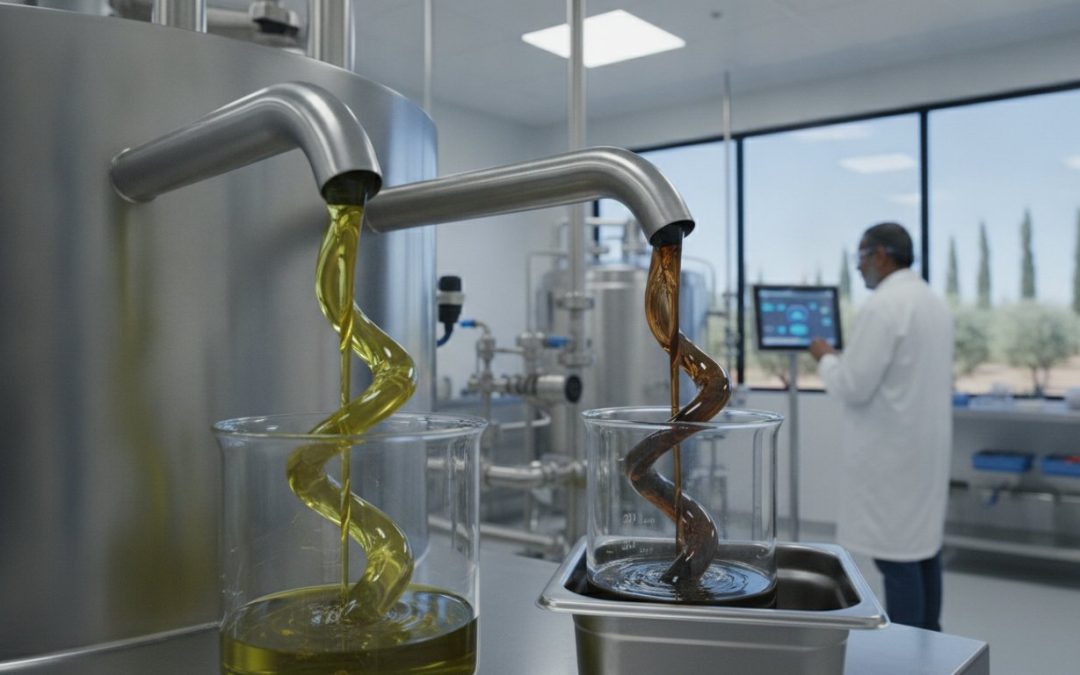
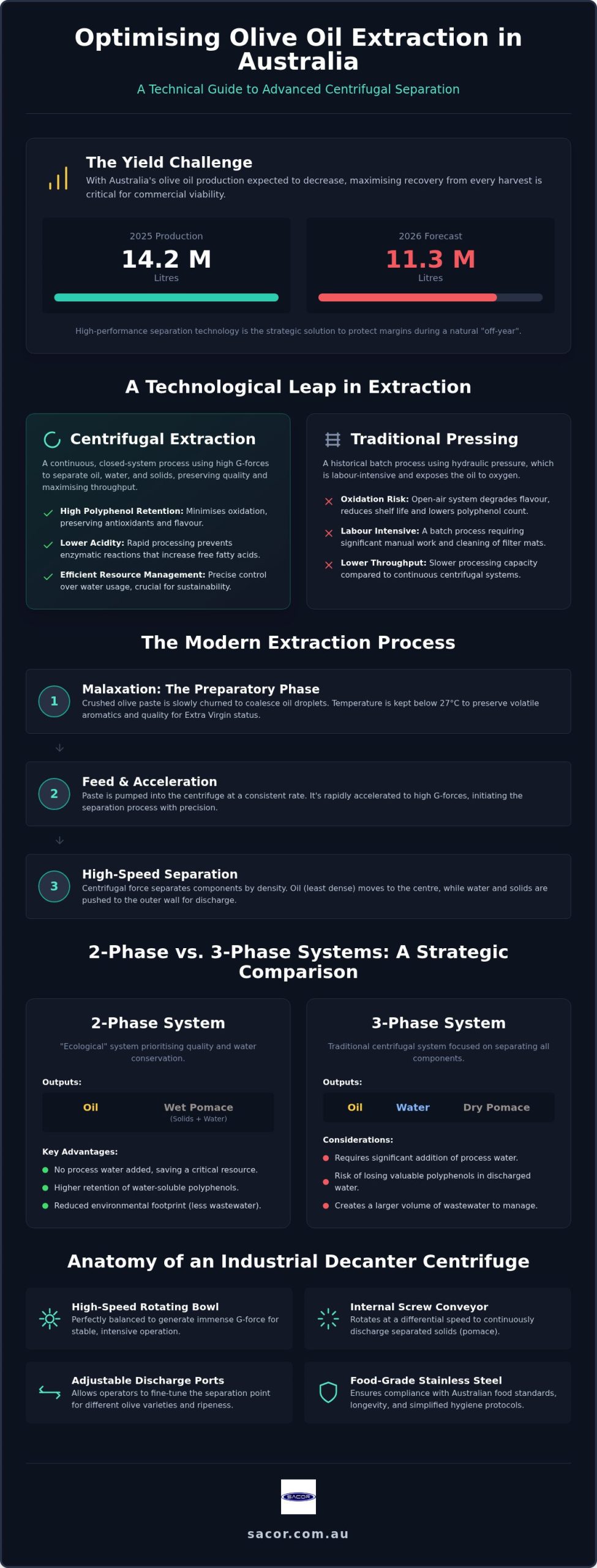
With Australia’s 2026 olive oil production expected to reach approximately 11.3 million litres, a notable decrease from the 14.2 million litres seen in 2025, every drop recovered by your olive oil centrifuge separator is vital for commercial viability. You likely understand that maintaining profitability during a natural “off-year” requires an extraction process that prioritises precision over volume. Traditional three-phase systems often present challenges, particularly regarding high water consumption and the loss of delicate polyphenols due to oxidation during processing.
Integrating high-performance separation technology into your facility is a strategic move to protect your margins while meeting the strict quality requirements of the Australian Standard AS 5264-2011. This guide examines how advanced centrifugal technology optimises oil recovery and preserves the complex flavour profiles that define premium Australian oils. We will also discuss the technical advancements in three-phase separation that reduce environmental footprints through significant water savings and improved waste management.
Key Takeaways
- Gain a technical understanding of the density differentials and centrifugal forces required to achieve precise separation between oil, water, and solid phases.
- Compare the operational advantages of two-phase and three-phase systems to balance high-yield recovery with reduced environmental impact and water usage.
- Master the integration between malaxation and clarification to ensure your olive oil centrifuge separator operates at peak efficiency throughout the harvest window.
- Determine how to scale your separation capacity by matching decanter throughput with upstream crusher and malaxer performance for a balanced processing line.
- Recognise the value of custom-engineered solutions and local Australian technical support in maintaining consistent oil quality and long-term equipment reliability.
The Fundamentals of Olive Oil Centrifuge Separators
The industrial olive oil centrifuge separator represents a significant technological leap from the static methods of the past. It functions by applying high-speed rotation to the olive paste, creating a centrifugal force thousands of times stronger than gravity. This force exploits the natural density differentials between the three primary components of the paste: oil, vegetation water, and solid pomace. Because oil is the least dense, it migrates toward the centre of the rotating bowl, while the heavier solids and water are forced toward the outer periphery.
Adopting this modern method of olive oil extraction allows Australian producers to operate in a closed, anaerobic environment. It’s a critical advantage over open-air systems, as it prevents the oxidation that degrades flavour and reduces shelf life. By minimising contact with oxygen, the centrifuge preserves the volatile compounds and antioxidants that define high-quality extra virgin olive oil. This process ensures that the chemical integrity of the fruit is maintained from the moment it enters the separation stage.
Centrifugal Force vs. Traditional Pressing
Transitioning from traditional hydraulic presses to centrifugal systems has redefined commercial milling efficiency. While pressing is a batch process that requires significant manual labour and frequent cleaning of filter mats, centrifugal extraction is a continuous operation. This shift increases throughput capacity and ensures a more hygienic process. The results are evident in the final product’s profile.
- Polyphenol Retention: Rapid processing reduces the time oil spends in contact with water and air, which helps retain higher levels of health-giving polyphenols.
- Lower Acidity: Faster extraction from the moment of harvest prevents the enzymatic reactions that lead to increased free fatty acids.
- Resource Management: Modern systems allow for precise control over water addition, which is a key factor for Australian operations focused on sustainability and water conservation.
Key Components of an Industrial Olive Oil Centrifuge
The reliability of a decanter centrifuge depends on its mechanical engineering and the quality of its components. At the core is a high-speed rotating bowl, which must be perfectly balanced to maintain stability during intensive operation. Inside this bowl, an internal screw conveyor rotates at a slightly different speed to continuously move the separated solids toward the discharge end. This differential speed is vital for managing the moisture levels of the pomace.
Precision is further managed through adjustable discharge ports, which allow operators to fine-tune the separation point between the liquid phases. This flexibility is essential for handling different olive varieties and varying ripeness levels across the season. To meet the rigorous hygiene standards of the Australian food industry, these machines are constructed from high-grade, food-safe stainless steel. This material ensures longevity and simplifies the intensive cleaning protocols required to maintain plant uptime during the peak harvest period.
The Centrifugal Extraction Process: From Malaxation to Clarification
The extraction process begins long before the paste reaches the separator. Malaxation is the critical preparatory phase where the crushed olive paste is slowly churned to encourage small oil droplets to coalesce into larger, easily separable globules. For Australian producers targeting extra virgin status, maintaining a temperature below 27°C during this stage is non-negotiable. If the paste exceeds this limit, the volatile aromatics and chemical integrity of the oil are compromised, regardless of the centrifuge’s mechanical efficiency. Effective malaxation ensures the olive oil centrifuge separator can achieve maximum yield without the need for excessive heat.
Step 1: Feed and Acceleration
Once the paste is properly prepared, it’s introduced into the centrifuge via a progressive cavity pump. Maintaining a consistent feed rate is essential for process stability; fluctuations can lead to equipment vibration or internal blockages that disrupt plant uptime. Inside the rotating bowl, the paste is rapidly accelerated to generate the high G-forces required for separation. This acceleration phase must be managed with precision to ensure the paste reaches the necessary rotational velocity without damaging the delicate oil structure. Proper feed management is the first step in ensuring consistent oil quality.
Step 2: Phase Separation and Discharge
Within the decanter, the continuous separation of phases occurs based on the density principles established earlier. The heavier solids are driven to the bowl wall and removed by the internal screw conveyor. The efficiency of this stage depends on the differential speed, which is the slight variation in rotational velocity between the bowl and the conveyor. By optimising this speed, operators can control the moisture levels in the pomace, which is a key factor in managing waste volume and environmental footprint. The oil and water phases are then discharged through separate ports, ready for the final polishing stage.
To ensure the highest level of clarity and stability, the oil typically undergoes a final polish in a vertical disc stack separator. This secondary process removes any microscopic moisture or fine sediment that may have bypassed the initial decanter stage. Achieving this level of precision requires equipment that’s correctly specified for your throughput needs. You can explore our range of food processing separation solutions to find a system that matches your facility’s specific requirements. This methodical approach ensures that the final product meets the rigorous standards expected by the Australian market while maintaining the cold-press integrity of the fruit.
2-Phase vs. 3-Phase Centrifuge Systems: A Strategic Comparison
Selecting the configuration of an olive oil centrifuge separator is a pivotal decision that influences both final product quality and the facility’s environmental footprint. While both systems rely on the same fundamental physics of density, their approach to waste streams and resource consumption differs significantly. Australian producers must weigh the benefits of oil integrity against the practicalities of waste management and water availability to ensure long-term commercial viability.
Two-Phase Systems: Sustainability and Quality
By adopting a two-phase configuration, producers can significantly reduce their facility’s water demand while simultaneously boosting the nutritional value of their oil. This system eliminates the requirement for process water addition during extraction, which prevents the loss of water-soluble polyphenols. The resulting oil often features a more robust flavour profile and higher antioxidant levels compared to three-phase alternatives. From an environmental standpoint, the absence of a separate wastewater stream simplifies compliance with local discharge regulations. The primary challenge remains the handling of the “wet pomace,” a high-moisture byproduct that requires specific storage and transport solutions due to its semi-liquid state.
Three-Phase Systems: Traditional Versatility
Three-phase systems offer a traditional approach that prioritises the production of dry solids. By introducing dilution water into the centrifuge, the system achieves a distinct separation between oil, vegetable water, and dry pomace. This drier byproduct is often preferred by mills that sell their pomace for secondary extraction or use it as biomass fuel, as it’s easier to handle and transport. However, this versatility comes at a cost. The process creates a substantial volume of vegetable water that contains organic matter and minerals, necessitating a robust wastewater treatment strategy. For many modern Australian plants, the increased water footprint of a three-phase olive oil centrifuge separator is a critical factor in their long-term sustainability planning. Understanding how tricanter centrifuge food processing Australia operations manage simultaneous solid, oil, and water separation can help producers evaluate whether this configuration aligns with their waste reduction and revenue recovery goals.
Choosing between these configurations requires a thorough analysis of your specific operational goals and local environmental constraints. Key differences include:
- Water Consumption: Two-phase systems operate almost water-free, whereas three-phase systems require consistent dilution to achieve separation.
- Waste Characteristics: Three-phase produces a drier, more manageable solid, while two-phase generates a single, moisture-rich waste stream that can be harder to process.
- Oil Stability: The lack of water contact in two-phase systems generally leads to higher polyphenol counts and improved shelf life for the final product.
Choosing the Right Separator for Australian Production Requirements
Selecting an olive oil centrifuge separator requires a precise technical alignment between your projected harvest window and the mechanical capacity of the extraction line. In Australia, the harvest is typically compressed into a narrow timeframe to ensure fruit reaches processing at peak freshness. This means throughput calculations must be based on peak hourly requirements rather than seasonal averages. A successful installation ensures that the centrifuge capacity perfectly matches the output of upstream crushers and malaxers, preventing bottlenecks that could lead to paste degradation or unnecessary oxidation.
Integration is a key factor for operational success. Modern units should be viewed as part of a broader food processing centrifuge system that manages everything from feed consistency to solids discharge. Advanced features like variable dynamic pressure allow operators to adjust parameters in real time, compensating for fruit moisture variations or changes in oil content as the season progresses. This level of control is essential for maintaining the high clarification levels required by the Australian market. Producers operating across multiple food sectors may also find value in reviewing the principles behind dairy separation equipment Australia specialists use, as the engineering standards for disc separators and decanter systems in high-throughput food processing share many common principles applicable to olive oil facilities.
Operational Scalability and Flexibility
Australian groves often contain a mix of olive varieties, each presenting unique separation characteristics. A versatile system can handle varying ripeness levels and fruit textures without requiring extensive downtime for reconfiguration. Many producers now opt for dual-purpose centrifuges that offer both two-phase and three-phase capabilities, providing the flexibility to pivot processing strategies based on water availability or waste management needs. Automation and integrated control systems further enhance this flexibility, allowing for real-time process optimisation that maintains consistent oil quality even when feed characteristics fluctuate.
Engineering for the Australian Environment
Industrial equipment in Australia must withstand high ambient temperatures, particularly in regions like the Murray Valley or Western Australia. Reliability during a heatwave is non-negotiable for a processing plant. Consequently, cooling systems and electrical components must be specified for local conditions to prevent thermal tripping or premature wear. All installations must also comply with Australian electrical and safety standards to ensure the protection of personnel and the longevity of the asset. Bespoke design plays a vital role here, as equipment often needs to be engineered to fit specific site footprints or integrate with existing infrastructure constraints.
Ensuring your facility is equipped with the correct technology involves a detailed assessment of your specific site requirements and production goals. If you’re planning a facility upgrade or a new installation, you can contact us to discuss our maintenance and technical support services to ensure your plant remains operational throughout the critical harvest season.
Optimising Performance with Sacor’s Separation Technology
Sacor positions itself as a technical authority, providing customised engineering solutions that address the specific feed characteristics of Australian olive groves. An olive oil centrifuge separator must be precisely configured to handle the variations in fruit moisture and oil content discussed in previous sections. By working as a partner rather than a vendor, we ensure that the technology is integrated seamlessly into your existing workflow, prioritising both yield and chemical integrity. Our approach involves a detailed assessment of your site’s infrastructure to ensure the chosen decanter matches your malaxer and crusher performance. For those seeking broader context on large-scale separation, our industrial decanter centrifuge Australia resource provides a comprehensive overview of mechanical separation across various sectors.
National Maintenance and Technical Support
Uptime during the harvest window is the primary metric of success for any commercial mill. Sacor provides structured maintenance programs designed to ensure your olive oil centrifuge separator operates at peak performance when it’s needed most. Our national footprint allows our engineers to provide on-site technical support for troubleshooting and precise process tuning, ensuring that parameters like differential speed and discharge pressure are optimised for your specific fruit. We also prioritise training for your plant operators, empowering them to manage the equipment with confidence and maximise both efficiency and equipment lifespan. This local presence is vital for ensuring that technical queries are addressed within Australian business hours, providing peace of mind during the intensive harvest period.
Spare Parts and Lifecycle Management
Relying on international supply chains during a critical harvest can lead to costly delays. Sacor maintains a national spare parts network to ensure that critical components, from internal screw conveyors to high-speed rotating bowls, are available locally. This strategy eliminates the risks associated with international shipping and ensures that your facility remains operational. This commitment to reliability extends to the entire lifecycle of your equipment. We specialise in upgrading existing systems with modern centrifugal technology, allowing older facilities to achieve the water savings and polyphenol retention levels required in today’s market. Our focus remains on sustainable industrial practice, building long-term partnerships that help Australian producers maintain their reputation for premium oil quality through consistent, high-performance separation.
Advancing Australian Olive Oil Extraction Efficiency
Maximising oil recovery while preserving delicate flavour profiles requires a methodical approach to mechanical separation. We’ve explored how density differentials and anaerobic environments protect the chemical integrity of the fruit; similarly, the choice between two-phase and three-phase systems remains a critical strategic decision for any Australian mill. Selecting the right olive oil centrifuge separator isn’t just about raw capacity. It’s about ensuring your equipment can withstand local environmental conditions and integrate seamlessly with your existing malaxation line.
Sacor serves as a trusted technical partner, providing custom-engineered separation solutions and a national maintenance network to ensure your plant remains operational during the intensive harvest window. Our expertise in specialised three-phase and decanter centrifuge systems allows us to support food and beverage producers with quiet assurance and proven reliability. We invite you to contact Sacor to discuss a customised olive oil separation solution tailored to your facility’s specific throughput and sustainability goals. Implementing the right technology today secures your production quality for many seasons to come.
Frequently Asked Questions
What is the difference between a 2-phase and a 3-phase olive oil centrifuge?
A 2-phase system separates the paste into oil and wet pomace without adding process water, whereas a 3-phase system produces oil, vegetable water, and dry pomace by adding dilution water. Choosing between them depends on your waste management infrastructure and local water availability. 2-phase systems are preferred for maximising polyphenol retention, while 3-phase systems are ideal if you require drier solids for secondary processing or traditional disposal methods.
How does a centrifuge separator improve olive oil yield?
An olive oil centrifuge separator improves yield by applying high centrifugal force to extract oil that traditional pressing might leave behind in the pomace. This mechanical precision allows for a more complete separation of the oil phase from the solids and water. By optimising the differential speed of the internal conveyor, operators can fine-tune the extraction process to recover every possible drop, ensuring high efficiency even when processing difficult fruit varieties.
What maintenance is required for an industrial olive oil centrifuge?
Industrial centrifuges require a structured maintenance program to ensure reliability during the intensive Australian harvest season. This includes regular lubrication of high-speed bearings, inspection of the internal screw conveyor for wear, and checking the balance of the rotating bowl. Sacor provides comprehensive maintenance and technical support services, including on-site troubleshooting and process tuning. Proactive servicing prevents unexpected downtime and ensures the equipment operates at peak performance when throughput requirements are highest.
Can a centrifuge be used for cold-press olive oil production?
Yes, modern centrifugal technology is fully compatible with cold-press standards provided the paste temperature remains below 27°C throughout the process. The centrifuge operates as a mechanical separation stage that doesn’t inherently generate excessive heat. By maintaining strict temperature control during malaxation and ensuring the centrifuge is correctly calibrated, you can produce extra virgin olive oil that meets the highest quality standards while benefiting from the efficiency of a continuous extraction system.
How do I choose the correct centrifuge capacity for my olive grove?
Selecting the correct capacity requires an analysis of your peak harvest volume and the desired processing window. You should calculate the total tonnes to be processed and divide this by the number of operational hours available during that window. It’s essential to match the olive oil centrifuge separator capacity to your upstream crusher and malaxer output. Choosing a system with slight over-capacity provides a buffer for high-yield years or unexpected processing delays.
What is the role of a vertical separator after the decanter centrifuge?
The vertical disc stack separator acts as the final polishing stage after the decanter centrifuge has removed the bulk of the solids and water. It removes microscopic impurities and residual moisture that can cause oil cloudiness or degradation during storage. This clarification process is vital for achieving the brilliant appearance and long-term stability required for premium retail products. It ensures the final oil is free from any sediment that could lead to anaerobic fermentation.
Are spare parts for olive oil centrifuges readily available in Australia?
Spare parts for industrial separation systems are readily available through Sacor’s national Australian network. We maintain a local inventory of critical components to ensure you don’t face international shipping delays during the harvest. This includes everything from seals and bearings to specialised internal components. Having local access to spare parts supply is a significant advantage for Australian producers who need to maintain plant uptime and resolve mechanical issues quickly without waiting for overseas freight.
How does centrifugal separation impact the flavour profile of olive oil?
Centrifugal separation preserves the oil’s flavour profile by processing the paste in a closed, anaerobic environment that prevents oxidation. This method retains the volatile aromatic compounds responsible for the fruity and peppery notes in high-quality oil. Because the process is faster than traditional methods, there’s less contact time between the oil and the vegetable water, which helps maintain a cleaner taste and higher levels of the natural antioxidants that define premium Australian oils.