
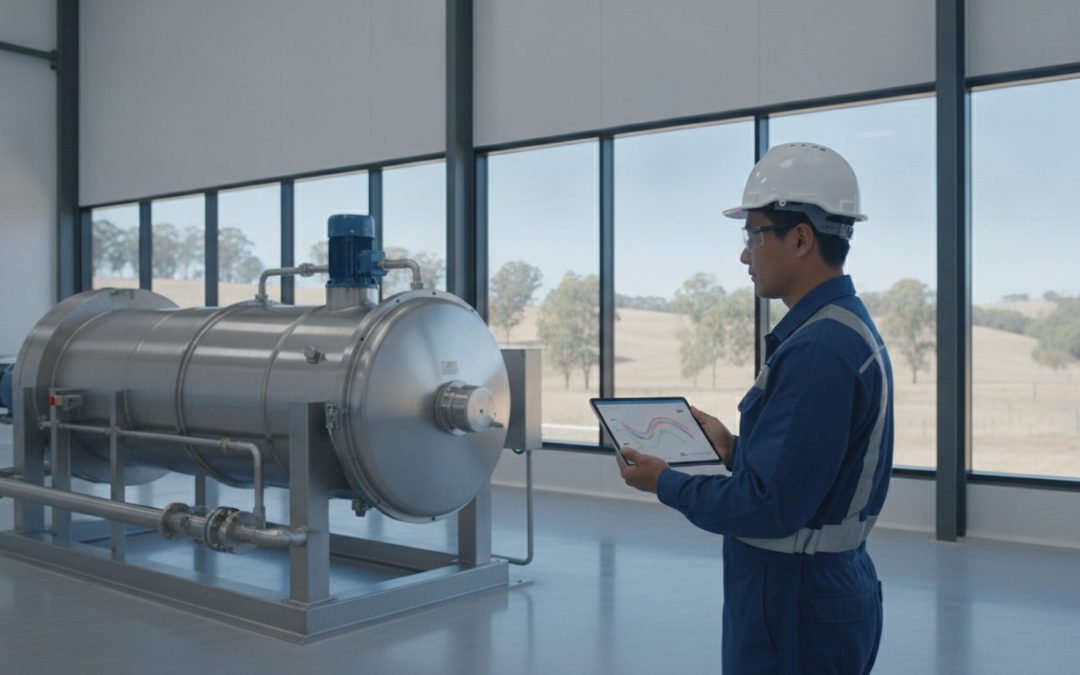
The Australian water and wastewater treatment market is projected to reach a revenue of USD 2,069.6 million by 2033, a figure that reflects the immense pressure on industrial operators to modernise their waste management. You likely recognise that the era of simple disposal is over; it’s been replaced by a landscape defined by the PFAS National Environmental Management Plan (PFAS NEMP 3.1) and soaring energy prices. Securing high-performance sludge dewatering equipment Australia wide is no longer a matter of convenience. It’s a critical requirement for maintaining a viable bottom line while meeting the stringent environmental standards of 2026.
This strategic guide demonstrates how advanced centrifugal separation technology transforms sludge from a costly liability into a manageable resource. By implementing high-torque decanter systems, your operation can achieve lower moisture content in cake for cheaper transport and significantly reduced chemical consumption. We’ll examine the technical shift towards smarter, automated dewatering solutions that ensure reliable performance and minimal downtime in the harshest industrial environments. From resource recovery to whole-of-life cost optimisation, this analysis provides the technical framework for sustainable separation success.
Key Takeaways
- Understand how evolving environmental standards and rising disposal levies are driving the adoption of high-precision separation technology.
- Evaluate why decanter centrifuges are the most efficient sludge dewatering equipment Australia wide for achieving optimal cake dryness.
- Compare the operational benefits of centrifugal systems against legacy equipment, specifically regarding space constraints and automated performance.
- Identify the critical feed parameters, such as viscosity and abrasive content, that dictate the engineering requirements for bespoke separation solutions.
- Discover how a structured approach to design, commissioning, and technical support ensures reliable, long-term outcomes for industrial operations.
Understanding Sludge Dewatering in the Australian Industrial Landscape
The sludge dewatering process is the critical mechanical step of separating solids from liquids to reduce waste volume and weight before final disposal or reuse. In the context of Australian industrial waste levies, sludge dewatering is the practice of removing water from waste streams to minimise the tonnage of solid material transported and discarded at landfill. As disposal costs climb, this process has transitioned from a backend utility to a front-of-mind strategic priority for plant managers across the country.
The Economic Impact of Moisture Reduction
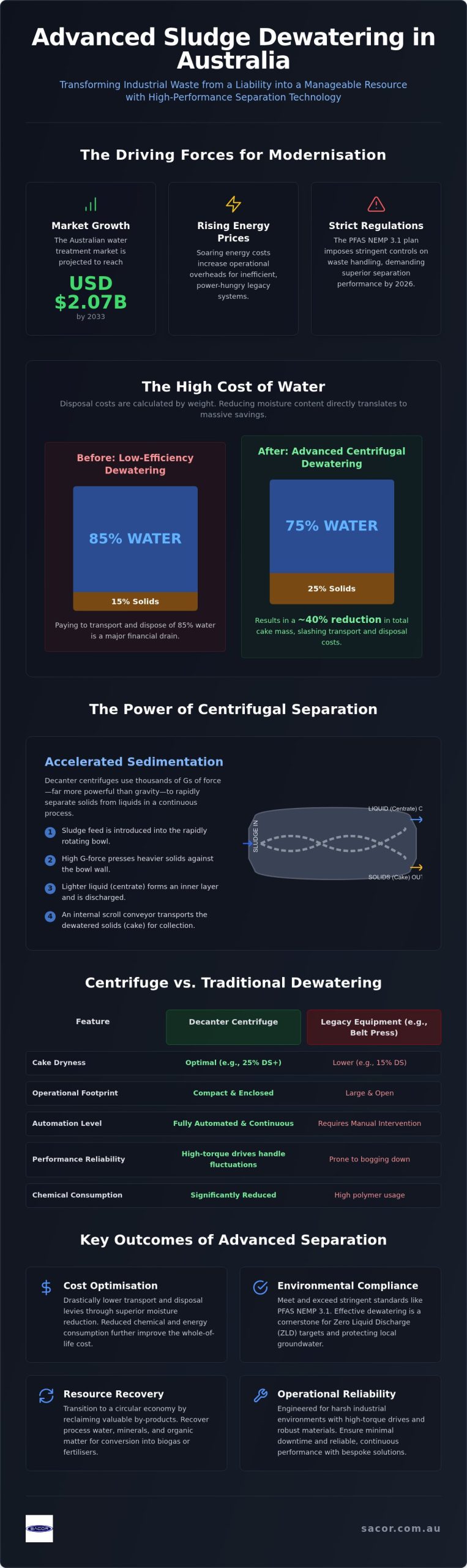
Disposal costs are primarily calculated by weight. If you’re transporting sludge at 15% dry solids (DS), you’re essentially paying to move 85% water. By upgrading to advanced sludge dewatering equipment Australia based operators can increase that concentration to 25% DS. This shift reduces the total mass of the waste cake by roughly 40%, providing a massive reduction in transport overheads. Drier cake also improves the stability of the material for stockpiling and handling. This efficiency reduces the environmental footprint of site operations by cutting down the number of heavy vehicle movements and lowering associated carbon emissions.
Regulatory and Environmental Compliance
Australian industrial operations face some of the world’s most stringent environmental standards. The 2026 PFAS National Environmental Management Plan (PFAS NEMP 3.1) mandates strict controls over the handling of biosolids and industrial tailings. High-performance separation ensures that contaminants are properly isolated and managed according to these updated guidelines. Effective dewatering is also a cornerstone of Zero Liquid Discharge (ZLD) targets. By reclaiming process water for reuse on-site, facilities protect local groundwater and simplify future site rehabilitation.
The industry is also shifting toward resource recovery. Industrial sludge isn’t just a liability; it’s a source for extracting valuable by-products. In sectors like mining and food processing, sophisticated separation allows for the recovery of process water, minerals, and organic matter that can be converted into biogas or fertilisers. This transition supports the circular economy and provides potential secondary revenue streams that offset the cost of the equipment itself. Sacor works as a technical partner to ensure these recovery goals are met through precise, site-specific engineering.
The Mechanics of Centrifugal Sludge Dewatering Equipment
Centrifugal separation operates on the principle of accelerated sedimentation. While traditional methods rely on gravity or mechanical pressing, a decanter centrifuge uses high G-force to separate solids from liquids in seconds. This is essential when dealing with the high-volume requirements of modern sludge dewatering equipment Australia wide. The process relies on a rapidly rotating bowl that generates thousands of Gs, forcing the heavier solid particles against the bowl wall while the lighter liquid phase forms an inner layer. A screw conveyor, or scroll, rotates at a slightly different speed to continuously move the accumulated solids toward the conical end of the bowl for discharge.
The efficiency of this process depends heavily on high-torque drives. Industrial sludge is rarely consistent; feed density and viscosity fluctuate throughout a single shift. A robust drive system maintains precise control over the scroll speed, ensuring that the equipment doesn’t bog down or lose separation efficiency when the solids load increases. This mechanical reliability is what allows for a continuous, automated operation with minimal manual intervention.
Decanter Centrifuge Engineering
The relationship between bowl speed and residence time is the primary lever for performance. A higher bowl speed increases G-force, but it’s the differential speed between the bowl and the internal scroll that dictates how quickly solids are discharged. Precise engineering of the scroll design and bowl geometry allows the system to be tuned for specific feed characteristics, such as abrasive mining tailings or delicate food processing waste. Stainless steel construction remains the standard for these components to resist the corrosive nature of many industrial streams, ensuring a longer operational lifespan in harsh environments.
Three-Phase vs Two-Phase Separation
While two-phase systems separate solids from a single liquid, three-phase centrifuges allow for the simultaneous separation of two immiscible liquids, such as oil and water, alongside the solid cake. Selecting the correct sludge dewatering equipment Australia wide requires an understanding of whether a two-phase or three-phase approach is necessary for your specific waste stream. This is particularly relevant for the energy and agriculture sectors where multi-component streams are common. Adhering to the Western Australian guidelines for biosolids management requires this level of precision to ensure that each phase meets discharge or reuse standards.
Operators seeking deeper technical specifications should consult our detailed guide on industrial decanter centrifuge Australia technology. Automated control systems now allow these units to maintain consistent cake dryness despite fluctuating feed rates, reducing the need for constant manual oversight. If your site requires a bespoke approach to separation, Sacor’s engineering team can assist in matching equipment geometry to your specific feed profile.
Centrifuge vs Traditional Dewatering: A Strategic Comparison
Decanter centrifuges represent a fundamental shift from the mechanical pressing methods used in belt and filter presses. While traditional systems rely on porous media that are prone to clogging, centrifugal technology utilises rotational force to achieve separation. This distinction makes it the superior choice for sludge dewatering equipment Australia wide, especially on sites where process reliability and consistency are non-negotiable. Traditional presses often struggle with fluctuating feed characteristics, whereas a centrifuge’s adjustable parameters allow it to maintain performance across variable streams.
Footprint is a primary strategic consideration for modern industrial sites. Centrifuges offer a compact, vertical or horizontal layout that requires significantly less floor space than the sprawling assemblies of belt presses. This makes them ideal for space-constrained facilities or containerised plants that need to be mobile or rapidly deployed. Because the system is entirely enclosed, it provides superior odour control and operator safety, which are essential for maintaining workplace health and safety (WHS) standards in sensitive environments. The automated nature of the process also reduces the need for constant manual oversight, allowing personnel to focus on higher-value technical tasks.
Performance and Cake Dryness
Centrifuges typically achieve a higher dry-solids content than belt presses, often by a margin of several percentage points. This difference is critical when handling “difficult” sludges, such as those with high grease content or biological loads that would otherwise blind or clog traditional filter cloths. By eliminating the risk of media blinding, centrifuges ensure a continuous discharge of consistent cake. For a deeper technical dive into these performance metrics, refer to our guide on sludge dewatering centrifuge Australia systems.
Total Cost of Ownership (TCO)
Evaluating the TCO requires looking beyond the initial CAPEX. While centrifuges often represent a higher upfront investment, the long-term OPEX is significantly lower due to several factors:
- Reduced Chemical Consumption: The high G-force environment often allows for lower flocculant dosages compared to pressure-based systems.
- Energy Efficiency: Modern high-performance motors and variable frequency drives (VFDs) have greatly reduced the energy profile of centrifugal units.
- Wash-water Requirements: Centrifuges require up to 90% less wash-water than belt presses because they don’t have belts that need continuous high-pressure cleaning.
This reduction in resource consumption, combined with the transport savings from drier cake, ensures that the initial capital expenditure is recovered through sustained operational efficiency. Sacor’s engineering team focuses on these TCO metrics to ensure that every installation provides a clear, long-term return on investment.
Factors to Consider When Selecting Dewatering Equipment
Selecting sludge dewatering equipment Australia wide involves a methodical evaluation of site-specific variables rather than a one-size-fits-all approach. Procurement decisions must account for peak processing volumes and the physical limitations of the existing facility. Matching the bowl diameter to throughput requirements is essential; an undersized unit leads to processing bottlenecks, while an oversized machine incurs unnecessary energy costs. Engineers must also consider how the equipment will integrate with existing feed pumps and site infrastructure to ensure a cohesive process flow.
Analysing Feed Characteristics
The physical properties of the sludge dictate the internal configuration and metallurgy of the centrifuge. Particle size, viscosity, and abrasive content are the primary drivers of wear and separation performance. If your stream contains high levels of sand or grit, as is common in many municipal or mining applications, the equipment requires specialised tungsten carbide wear protection on the scroll flights and discharge ports. For detailed insights on managing these specific municipal streams, our guide on wastewater treatment centrifuge Australia provides deeper technical analysis. Key feed factors include:
- Particle Size Distribution: This influences the G-force required to achieve a clear centrate.
- Viscosity: Higher viscosity affects the torque required by the drive system to move the solids.
- Abrasive Content: This determines the level of hard-facing and component protection needed for long-term reliability.
Integration and Commissioning
Site infrastructure must support the equipment’s operational needs, particularly regarding power availability for high-torque motors. Modern systems must integrate seamlessly with plant SCADA and control systems to allow for remote monitoring and automated adjustments. Customised engineering for unique Australian site conditions is essential to ensure the equipment survives environmental extremes and site-specific feed chemistry.
Before finalising an installation, pilot testing and laboratory analysis are vital steps to verify separation performance. These tests help determine the optimal flocculant dosage, which directly impacts your long-term chemical costs. Professional commissioning ensures the system reaches its nameplate capacity from day one and operates within its designed efficiency parameters. To begin a technical assessment for your facility, contact Sacor’s engineering team to discuss bespoke separation solutions tailored to your site’s feed profile.
Optimising Processes with Sacor’s Separation Technology
Sacor positions itself as a technical partner rather than a simple equipment vendor. We understand that the successful implementation of sludge dewatering equipment Australia wide requires more than just hardware; it demands a deep integration of engineering expertise with site-specific operational goals. Our approach focuses on creating bespoke separation systems that address the unique feed characteristics of each facility, ensuring that performance is optimised from the initial design phase through to long-term operation. By working closely with plant managers, we ensure that every solution is robust enough to handle the harsh industrial environments typical of Australian sites.
Customised Engineering Solutions
Designing a high-performance centrifuge requires a collaborative effort between our in-house engineers and site personnel. We analyse variables such as feed chemistry and particle density to determine the precise bowl geometry and scroll configuration needed for your specific application. In mining tailings operations, we focus on robustness and specialised wear protection to handle high-solids loads and abrasive materials. In food and beverage processing, the emphasis shifts toward separation precision and maintaining the integrity of the process stream. This bespoke engineering ensures that the system delivers the highest possible dry-solids content while minimising chemical flocculant use. Maintaining this level of performance requires a proactive approach to equipment health, which is detailed in our guide on industrial centrifuge spare parts Australia.
Lifecycle Support and Maintenance
Reliability in industrial separation is built on a foundation of consistent maintenance and the immediate availability of critical components. Sacor maintains a comprehensive national support framework that covers installation, commissioning, and ongoing technical troubleshooting. We recognise that unplanned downtime is the single greatest threat to operational profitability. To mitigate this risk, we hold an extensive inventory of local spare parts, ensuring that wear items and critical assemblies are available without the delays associated with international shipping. This local presence is vital for maintaining the continuous operation required by large-scale industrial plants.
Our technical support includes regular site audits and scheduled maintenance programs designed to identify potential issues before they lead to mechanical failure. This proactive strategy maximises equipment uptime and extends the operational lifespan of the centrifuge. By partnering with a specialist that provides end-to-end lifecycle support, Australian industrial operators can maintain compliance and cost-efficiency with total confidence. Enquire about customised sludge dewatering solutions from Sacor to see how our engineering team can optimise your site’s separation performance.
Future-Proofing Industrial Separation in 2026
The transition toward advanced separation technology is no longer optional for Australian industrial operators facing rising disposal levies and tighter environmental mandates. By prioritising high-torque centrifugal systems over traditional pressing methods, facilities can achieve significant reductions in cake moisture and chemical consumption. This strategic shift not only lowers operational overheads but also ensures long-term compliance with evolving national standards.
Successfully implementing sludge dewatering equipment Australia wide requires more than just a vendor; it requires a technical partner who understands the nuances of local site conditions. Sacor provides specialist Australian engineering expertise, national installation and commissioning support, and an extensive local spare parts inventory to ensure your operation maintains maximum uptime. Our focus on bespoke solutions means your equipment is precisely matched to your feed characteristics for optimal results.
Take the next step in optimising your waste management strategy and resource recovery goals. Contact Sacor for a Customised Sludge Dewatering Assessment to discuss how our separation technology can enhance your site’s efficiency and environmental performance. We look forward to engineering a solution that meets your specific industrial requirements.
Frequently Asked Questions
What is the most efficient sludge dewatering equipment for mining tailings?
Decanter centrifuges represent the most efficient solution for mining tailings because they achieve high solids concentration and maximise process water recovery. Unlike traditional settling ponds, these systems utilise high G-force to separate fine particles rapidly. This efficiency is critical for meeting the Global Industry Standard on Tailings Management (GISTM). Sacor engineers these systems with specialised wear protection to ensure they survive the intense abrasive nature of mineral processing streams across the country.
How does a decanter centrifuge compare to a belt filter press for sludge?
A decanter centrifuge provides a more compact footprint and requires up to 90% less wash-water than a belt filter press. While belt presses rely on porous media that can clog, centrifuges use rotational force in an enclosed system. This design significantly improves odour control and operator safety. For many facilities, the higher initial investment in sludge dewatering equipment Australia wide is offset by the reduced chemical costs and lower transport fees resulting from drier cake discharge.
Can sludge dewatering equipment handle abrasive materials like sand or grit?
Modern centrifugal systems are specifically engineered to handle abrasive materials such as sand, grit, and mineral fines. To prevent premature wear, critical components like the scroll flights and discharge ports are reinforced with tungsten carbide hard-facing. This protection ensures the equipment maintains its mechanical integrity even when processing high-silica streams. Regular technical audits help monitor these wear surfaces to prevent unexpected downtime and maintain optimal separation performance throughout the machine’s operational lifecycle.
What are the typical maintenance requirements for an industrial centrifuge?
Maintenance focuses on three primary areas: lubrication, vibration monitoring, and wear part inspection. High-speed rotating assemblies require precise lubrication schedules to protect bearings and gearboxes from heat and friction. Automated sensors typically monitor vibration levels to detect imbalances before they cause significant damage. Operators should also conduct regular checks on the scroll flights and discharge nozzles. Sacor supports these requirements through scheduled maintenance contracts and a comprehensive national inventory of critical spare parts.
How much can sludge dewatering reduce disposal costs for Australian sites?
Effective dewatering can reduce total waste volume by up to 40% when increasing dry solids content from 15% to 25%. Since disposal levies at Australian landfills are calculated by weight, removing excess water directly lowers transport and gate fees. By producing a drier, more stable cake, facilities also minimise the number of heavy vehicle movements required on-site. These cumulative savings allow industrial operators to recover the capital cost of the equipment within a few years of commissioning.
Is a three-phase centrifuge necessary for wastewater treatment?
A three-phase centrifuge is only necessary if your wastewater stream contains significant amounts of oil or grease that must be separated from both the water and the solids. Standard municipal wastewater typically only requires two-phase separation. However, industrial wastewater from food processing or energy sectors often benefits from three-phase technology to recover valuable fats or oils. Selecting the correct configuration depends on a detailed analysis of your specific site feed characteristics and resource recovery targets.
What factors influence the choice of flocculants in centrifugal dewatering?
The selection of flocculants depends on the ionic charge of the particles, the sludge pH, and the specific G-force generated by the centrifuge. Laboratory analysis is essential to determine whether a cationic or anionic polymer is required to achieve optimal flocculation. The high-shear environment inside a centrifuge bowl also means that the polymer must have sufficient molecular weight to maintain floc integrity. Correct dosing is vital for minimising chemical costs while ensuring a clear centrate and dry cake.
Does Sacor provide installation and commissioning for dewatering systems?
Sacor provides comprehensive on-site installation and commissioning services as part of our national support framework. Our technical team ensures that the centrifuge integrates seamlessly with your existing plant SCADA and pump infrastructure. During commissioning, we calibrate the drive parameters and chemical dosing to reach nameplate capacity and ensure the system operates at peak efficiency. This professional setup is a critical step in verifying that the equipment meets your specific performance and environmental compliance targets.